

Why Synthetic Ectoine Fails: Sourcing Bio-Fermented Extremolyte APIs
Oct 13, 2026
Leave a message
The extremolyte compounds and Active Pharmaceutical Ingredients (APIs) described herein are supplied strictly for authorized B2B OEM/ODM cosmetic compounding and clinical R&D. They are not finished consumer dermatological products. The information provided focuses strictly on molecular hydration kinetics and bio-fermentation chemistry. All downstream formulation, dermal toxicity testing, and cosmetic label claims must comply with the dermatological regulations (e.g., FDA, EMA, IFRA) of the target regional market prior to commercial distribution.
Why Synthetic Ectoine Fails: Sourcing Bio-Fermented Extremolyte APIs (CAS 96702-03-3)
I frequently see cosmetic emulsions fail clinical patch tests due to chiral impurities. Here is the bench reality of Ectoine procurement.
Ectoine is an extremolyte-a survival molecule that bacteria use to withstand deadly salt lakes and deserts. In aesthetic dermatology, it is heavily utilized as a cellular shield against photoaging and PM2.5 pollution. Because authentic bio-fermentation requires massive upfront capital for bioreactors and strain cultivation, the raw material market is currently flooded with chemically synthesized variants.
Here is the problem on the manufacturing line: chemical synthesis creates a racemic mixture. It produces both L-Ectoine (the natural, biologically active form) and D-Ectoine (a chiral impurity). The human epidermis cannot process D-enantiomers. When you formulate with synthetic Ectoine, you are essentially dumping biologically inert, solvent-heavy impurities onto a compromised skin barrier. It destroys the product's safety profile.
If your brand claims barrier repair, you need absolute biological mimicry. At Xi'an Tihealth, our technical operations team supplies strictly bio-fermentation grade Ectoine Powder (CAS 96702-03-3). Using wild-type Halomonas elongata fermentation, we isolate 100% pure L-Ectoine with zero chemical solvent residue. This dossier outlines exactly how the molecule works, and the forensic specs you need to verify before signing a purchase order.

1. The Molecular Architecture: How Extremolytes Actually Work
Ectoine doesn't function like a traditional lipid or humectant. To formulate with it effectively, you have to understand thermodynamic water-binding physics.
The Kosmotropic Water Shield
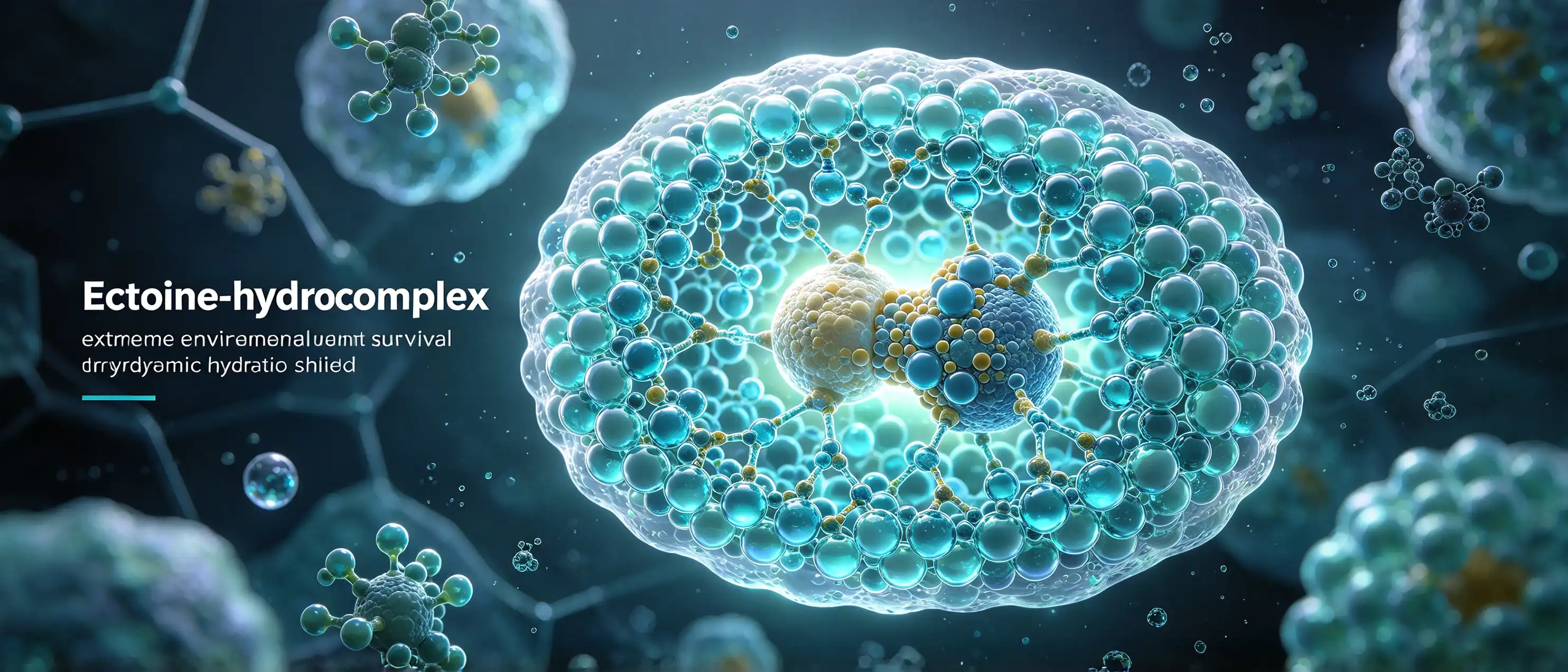
Mechanism: Thermodynamic StructuringIn the lab, we classify Ectoine as a kosmotrope. It does not penetrate deep into cells or trigger receptors. Instead, it forces adjacent water molecules into a highly dense, structured thermodynamic configuration known as the "Ectoine Hydro-Complex." This dense hydration shell surrounds cell membranes and proteins, physically stabilizing them against extreme heat, freezing, and desiccation. This is why it outperforms standard Hyaluronic Acid in 72-hour moisture retention assays.
Langerhans Cell Survival
Target: UVA/UVB Stress ResponseFormulators often mistake Ectoine for a UV filter. It is not; it doesn't absorb UV rays. What it actually does is prevent UV-induced cellular suicide (apoptosis). When UVA/UVB hits the skin, it normally destroys Langerhans cells (the skin's immune sentinels). Ectoine's hydro-complex shields these cells from the resulting oxidative stress, preventing the activation of enzymes that chew up collagen. It stops photoaging at the cellular stress level, making it a mandatory addition to high-end SPF boosters.
The PM2.5 Physical Barrier
Challenge: Airborne Particulate InflammationUrban pollution particles (PM2.5) trigger severe intracellular inflammatory cascades when they touch the epidermis. The Ectoine hydration shell physically blocks these ultramicroscopic toxins from making contact with the cellular membrane. By preventing contact, it prevents the release of pro-inflammatory cytokines. We often describe it to clients as an invisible, breathable gas-mask for the skin barrier.
Bio-Fermentation vs. Chemical Synthesis
Metrics: 100% L-Ectoine · Zero Synthetic SolventsChemical synthesis yields a racemic mixture of D/L-Ectoine, laden with harsh industrial solvents. We utilize highly controlled bio-fermentation. By feeding specifically selected extremophilic bacterial strains in monitored bioreactors, the organisms naturally excrete 100% pure L-Ectoine. Subsequent ultra-filtration and crystallization isolate a brilliant white powder that is biochemically identical to nature, ensuring zero dermal sensitization.
2. The Forensic Matrix: Reading the Specs
Procuring Ectoine based purely on per-kilo pricing introduces massive toxicological risks. Here is the forensic divergence we show clients when comparing commodity synthetic suppliers against our bio-fermented API.
| Manufacturing Metric | Commodity Synthetic Ectoine | Xi'an Tihealth Bio-Fermented API |
|---|---|---|
| Chiral (Optical) Purity | Unverified racemic mixtures containing D-Ectoine, which human cells cannot metabolize. | Verified specific optical rotation. 100% pure L-Ectoine ensuring absolute biological mimicry. |
| Residual Solvents | High risk of harsh chemical synthesis solvents (e.g., methanol, acetone) triggering dermal sensitization. | Zero chemical solvents. Purified entirely via aqueous ultra-filtration and safe crystallization. |
| Endotoxin Limits | High risk of bacterial endotoxin contamination from poor manufacturing environments. | Strictly controlled via ISO9001:2015 cleanrooms, rendering the API safe for compromised skin barriers. |
| Solubility Profile | Inconsistent dissolving rates; often causes cloudiness in clear toner formulations due to impurities. | Highly water-soluble. Dissolves instantly into a crystal-clear solution, preserving premium aesthetics. |
API Procurement & Formulation FAQ
We see this often. Synthetic production typically fails to isolate the active enantiomer, delivering a racemic mix. The human body recognizes D-Ectoine as a foreign impurity. When you apply it to a compromised skin barrier (such as a post-sunburn or post-laser treatment), these synthetic impurities, combined with residual industrial solvents, trigger severe inflammatory responses. Bio-fermentation is the only reliable method to secure safe, 100% natural L-Ectoine.
They are highly synergistic, not mutually exclusive. Hyaluronic Acid (HA) acts as a powerful humectant, pulling water into the epidermis. However, without a shield, that water rapidly undergoes Transepidermal Water Loss (TEWL). Ectoine forms a dense thermodynamic hydro-complex that locks that moisture in place at a cellular level, turning temporary HA hydration into a sustained 72-hour barrier.
Our bio-fermented Ectoine is extremely hydrophilic (water-soluble). It dissolves instantly in the aqueous phase of your manufacturing process without requiring heating or specialized solubilizers. It remains flawlessly stable across a broad pH range (pH 1–9) and withstands high shear mixing and thermal processing without degrading.
Chemical UV filters absorb or reflect photons on the skin's surface. Ectoine operates intracellularly. While UV rays still penetrate the skin, Ectoine's hydro-complex shield surrounds immune cells (Langerhans cells) and DNA structures, preventing the UV radiation from inducing oxidative stress, cellular apoptosis, and the release of inflammatory cytokines. It stops the biological damage caused by UV.
The API is supplied as an ultra-pure, bright white crystalline powder. It is packaged in sterile, sealed, heavy-gauge aluminum foil bags or moisture-proof fiber drums. While highly stable, procurement teams must ensure it is stored in a cool, dry environment away from intense UV light to maintain its 24-month analytical shelf life before compounding.
Formulate the Ultimate Extremolyte Shield.
Stop compromising your prestige cosmetic serums with synthetically cheap, chiral-contaminated raw materials. Our Bio-Fermentation Ectoine API guarantees absolute cellular shielding and zero dermal sensitization. Backed by HPLC data you can audit, and a manufacturing partner you can scale with.
Request Technical Dossier & SamplesDisclaimer: This technical dossier is for B2B industry education and R&D reference only. It does not constitute medical advice or promise any therapeutic effect. API handling, formulation limits, and transdermal dosages must comply with local cosmetic regulations (e.g., FDA, IFRA) and be validated by qualified toxicologists and regulatory professionals.
Send Inquiry