

Stop Gastric Hydrolysis: Sourcing Stable BPC-157 Arginine Salt API (CAS 137525-51-0)
Oct 11, 2026
Leave a message
The synthetic peptide compounds and Active Pharmaceutical Ingredients (APIs) described herein (specifically Pentadecapeptide-157 / BPC-157) are supplied strictly for authorized B2B clinical research, veterinary applications, and approved in-vitro diagnostics. They are not dietary supplements and are not approved by the FDA for human compounding or consumption. Furthermore, BPC-157 is strictly prohibited by the World Anti-Doping Agency (WADA) for use by competitive athletes. The information provided focuses strictly on formulation chemistry, gastric stability, and pharmacokinetic mechanisms. Procurement entities assume absolute legal liability for ensuring compliance with all regional pharmacological, compounding, and customs regulations prior to purchase.
Stop Gastric Hydrolysis: Sourcing Stable Pentadecapeptide-157 Arginine Salt (CAS 137525-51-0)
Eradicate oral formulation failure. A master procurement guide to arginate-stabilized peptides, enzymatic resistance, and absolute molecular purity.
However, theoretical efficacy does not translate to systemic bioavailability if the molecule is structurally destroyed before it reaches the bloodstream. The vast majority of commodity BPC-157 on the market is synthesized as an Acetate Salt. While acceptable for sterile, buffered subcutaneous injections in a laboratory setting, the acetate form is highly unstable in harsh pH environments. If an R&D team formulates BPC-157 Acetate into an oral capsule or liquid suspension, the peptide undergoes immediate and violent hydrolysis upon contact with gastric acid (pH 1.5–3.5). The peptide chain breaks apart into useless amino acid fragments, yielding an effective bioavailability of near zero.
Enteral efficacy demands structural chemical protection. At Xi'an Tihealth Biotechnology Co., Ltd., we engineered a solution to this specific pharmacokinetic barrier. We supply Pentadecapeptide-157 API Powder strictly in the Stable Arginine Salt form. By exchanging the acetate counter-ion with arginine, the peptide's conformational geometry is locked, conferring exceptional resistance to gastric acid and pepsin degradation. This dossier deconstructs the receptor biochemistry, the physics of salt-form stabilization, and the forensic parameters required for successful oral compounding.
1. The Molecular Architecture: Pentadecapeptide-157 Kinetics
Formulating complex peptides requires an exact understanding of synthetic chemistry and simulated physiological degradation. We divide the compounding parameters into four mathematically validated modules.
The Gastric Barrier: Acetate vs. Stable Arginine Salt
Mechanism: Conformational Shielding · pH ResistancePeptides are highly vulnerable to enzymatic and acidic cleavage. BPC-157 Acetate degrades aggressively under UV light, heat, and gastric fluids. The Stable Arginine Salt form alters the peptide's thermodynamic properties. The strong basicity of the arginine counter-ion creates a protective electrostatic environment around the 15-amino acid sequence. This structural shielding allows the intact peptide to survive stomach acid, passing into the small intestine where it is absorbed systemically via paracellular or transporter-mediated pathways. Application: Oral research capsules, liquid mucosal repair suspensions.
Angiogenesis & Fibroblast Upregulation
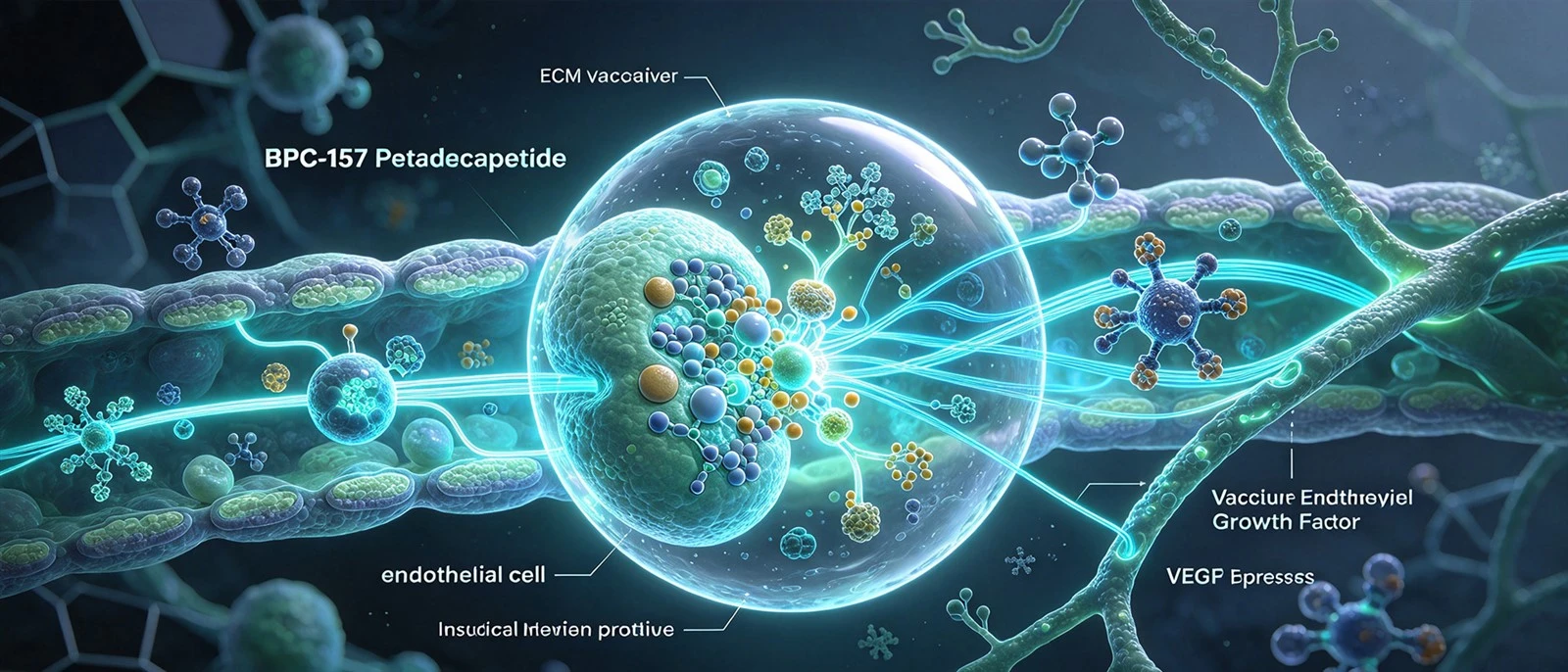
Action: VEGF Expression · Tendon RepairIn research models, BPC-157 exhibits profound tissue-healing kinetics by powerfully upregulating Vascular Endothelial Growth Factor (VEGF). This initiates rapid angiogenesis-the formation of new blood vessels-channeling oxygen and nutrients to avascular zones like severe tendon tears, ligament ruptures, and deep muscle contusions. Concurrently, it stimulates fibroblast migration and survival, vastly accelerating the construction of organized extracellular matrix (ECM) and collagen networks at the injury site.
Gastrointestinal Mucosal Restoration
Target: Nitric Oxide System · Ulcerative RecoveryDiscovered originally as a component of human gastric juice, BPC-157 maintains an aggressive affinity for the digestive tract. It modulates the Nitric Oxide (NO) synthesis pathway, offering severe cytoprotection to the gastric endothelium. Research applications heavily focus on its ability to rapidly seal mucosal ulcers, counteract NSAID-induced intestinal damage, and repair the tight junctions responsible for "leaky gut" permeability.
Structural Integrity & Analytical Compliance
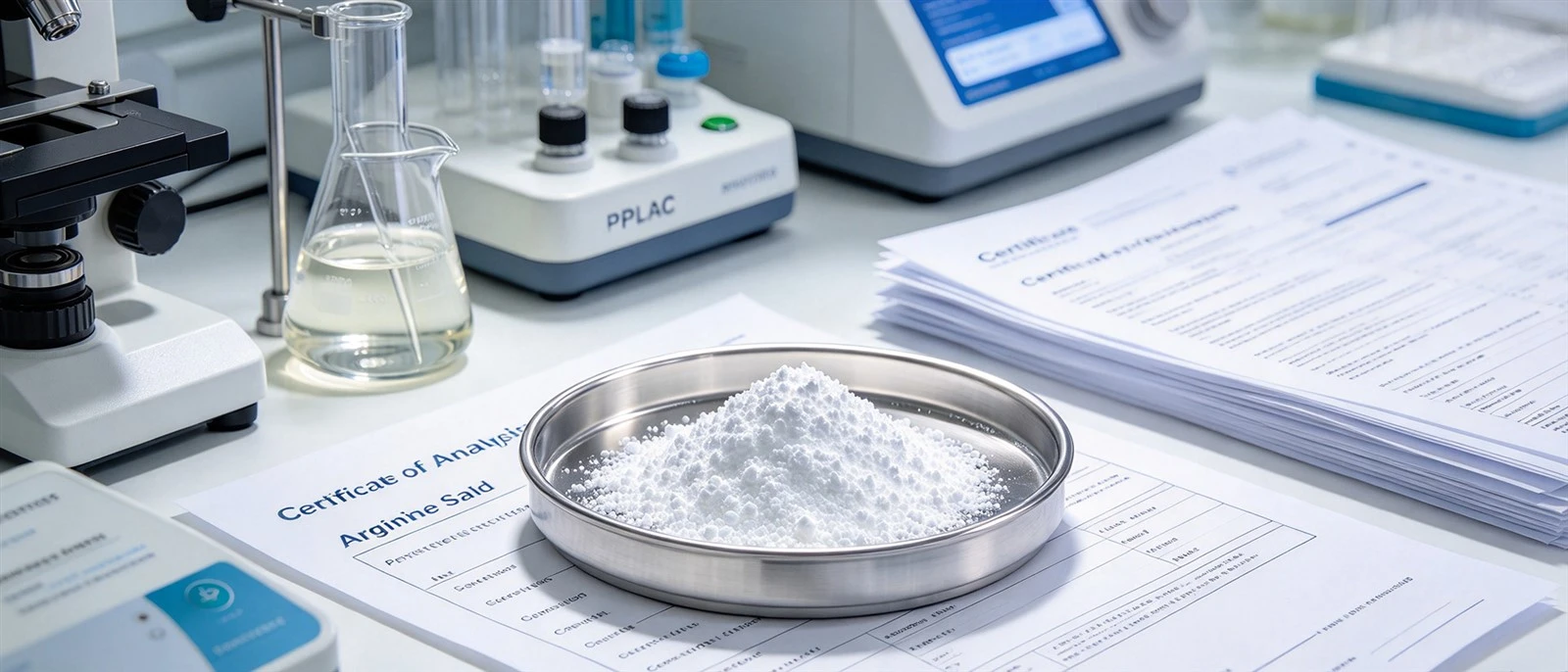
Metrics: HPLC ≥99.0% · Low TFA ResiduePeptide synthesis is frequently plagued by incomplete sequences and heavy contamination with Trifluoroacetic acid (TFA). Xi'an Tihealth utilizes advanced ion-exchange chromatography to convert the raw peptide into the stable Arginine salt, meticulously stripping out TFA. We guarantee a minimum High-Performance Liquid Chromatography (HPLC) assay of 99.0%, combined with Mass Spectrometry (MS) to prove the exact pentadecapeptide molecular weight.
2. The Forensic Matrix: Acetate vs. Arginine Salt BPC-157
Procuring synthetic peptides based on cheap per-gram pricing introduces massive degradation risks. Review the forensic divergence between commodity Acetate salts and Xi'an Tihealth's Arginine Salt API specifications.
| Pharmacokinetic Metric | Commodity BPC-157 (Acetate Salt) | Xi'an Tihealth BPC-157 (Arginine Salt) |
|---|---|---|
| Gastric Acid Stability | Catastrophic failure. Over 90% degradation within 15 minutes of exposure to pH 2.0 (simulated gastric fluid). | Highly stable. Intact peptide survives gastric transit, allowing for systemic enteral absorption. |
| Thermal & UV Stability | Degrades rapidly at room temperature. Requires strict continuous cold-chain logistics. | Enhanced conformational shielding extends stability, drastically improving formulation shelf-life. |
| Oral Bioavailability | Effectively zero. Suitable only for sterile buffered subcutaneous or intramuscular injection. | Designed specifically for oral (capsule/liquid) and mucosal delivery systems in research applications. |
| Assay Purity (HPLC) | Often contaminated with high TFA residue and truncated, inactive 8-12 amino acid sequences. | ≥99.0% HPLC purity. Exact 15-amino acid sequence verified via Mass Spectrometry. |
API Procurement & Formulation FAQ
The Acetate salt of BPC-157 is thermodynamically unstable in low pH environments. When an oral capsule dissolves in the stomach, the highly acidic gastric fluid (pH 1.5-3.5) rapidly attacks the peptide bonds, cleaving the 15-amino acid chain into useless fragments. By the time the material reaches the small intestine for absorption, the active molecule has been completely destroyed. The Arginine salt prevents this hydrolytic cleavage.
No. BPC-157 is explicitly listed on the World Anti-Doping Agency (WADA) prohibited list under the category of unapproved substances. It is strictly banned for use by competitive athletes. Formulators must ensure this API is procured solely for authorized clinical research, veterinary applications, or non-competing demographics where legally permitted.
Beyond gastric stability, the Arginine counter-ion confers significantly better resistance to UV light and elevated temperatures. This means formulators do not have to maintain a flawless, frozen cold-chain during the manufacturing, blending, and encapsulation processes, drastically reducing API waste and improving the shelf-life stability of the finished research product.
We utilize High-Performance Liquid Chromatography (HPLC) to guarantee a minimum assay of 99.0%. More importantly, we deploy Mass Spectrometry (MS) to verify the exact molecular weight of the peptide. This ensures the full 15-amino acid chain is intact and not truncated (missing amino acids), which frequently occurs during cheap Solid-Phase Peptide Synthesis (SPPS).
The API is supplied as a deeply dehydrated, lyophilized (freeze-dried) powder. It is packaged in sterile, sealed glass vials or opaque, multi-layer fluorinated pouches to block UV degradation and moisture ingress. While the Arginine salt is highly stable, we still recommend cold-chain transit (2°C to 8°C) and long-term freezer storage (-20°C) prior to reconstitution or compounding.
Formulate with Pharmacokinetic Certainty.
Stop compromising your research formulations with unstable Acetate peptides that rapidly hydrolyze in the stomach. Our Arginine Salt API guarantees conformational shielding and precise systemic bioavailability. Backed by HPLC and Mass Spectrometry data you can audit.
Request HPLC Assays & Trial SamplesDisclaimer: This technical dossier is for B2B industry education, authorized R&D, and veterinary reference only. It does not constitute medical advice or promise any therapeutic effect for humans. API handling, formulation limits, and systemic dosages must comply with local pharmacological regulations (e.g., FDA, WADA) and be validated by qualified toxicologists and regulatory professionals.
Send Inquiry