
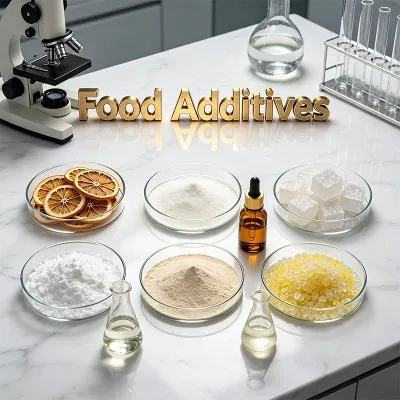
Your Professional Food Additive Supplier
 

The company takes research and development as the engine, innovation as the wing, manufacturing as the cornerstone, and sales as the channel, integrating four core businesses. We carefully produce various natural herbal extracts, natural food additives, pharmaceutical intermediates, daily chemical products, and conduct in-depth technical research, transfer, and consulting services in a wide range of fields such as food, beverages, cosmetics, pharmaceuticals, and health products.


Product Quality
By actively introducing and optimizing high-tech methods such as protein separation, bioengineered bacterial fermentation, and advanced purification technology, each of our products is like carefully crafted works of art, emitting high-quality light.


Accept ODM/OEM Service
Tihealth provides personalized product customization services such as ODM and OEM, just like a thoughtful craftsman, tailoring exclusive boutique products for customers.


Rich Experience
We have an extensive 12 years of in-depth expertise in this field. This long-term experience has enabled us to have a profound understanding of market dynamics, industry trends, and customer needs, allowing us to provide highly effective and tailored solutions.


Customer Service
We are always firmly committed to being customer-oriented. We strive to provide prompt and accurate responses to inquiries, offer professional advice and support, and ensure that each interaction leaves customers feeling valued and satisfied.


  • Astragalus-infused Coffee

    Products Description Astragalus infused Coffee powder produced by Xi'an Tihealth This product adopts aerospace freeze-drying and wall breaking technology (-45 ℃ vacuum sublimation drying),

  • Yeast Beta Glucans

    Product Name: Yeast beta glucansPlant source: Derived from Saccharomyces cerevisiaeContent specifications: Content specifications are usually 90%, 95%, 98%Testing method: HPLCActive ingredient: The

  • Green Superfood Blends

    Product Name: Green Superfood Blended PowderSource: Spirulina (rich in phycocyanin and gamma linolenic acid), wheatgrass (high in chlorophyll and vitamin K), kale (dietary fiber and vitamin C),

  • Ganoderma Mushroom Coffee Compound Powder

    Product Name: Ganoderma Mushroom Coffee Compound Powder (Four in One)Raw material types: White birch mushroom+lingzhi mushroom+(monkey head mushroom, oyster mushroom, shiitake mushroom, choose one

  • Sheep Colostrum Powder

    Product Name: Sheep colostrum powderContent specifications: 5%, 10%, 20%Testing method: HPLCActive ingredients: protein, immunoglobulin, vitamins, etcNumber of Contents: 80-100Appearance: Fine yellow

  • Chlorella Powder

    Product Name: Chlorella PowderPlant source: Single celled green algaeContent specification: 30% -99%Testing method: HPLCActive ingredient: proteinAppearance: Green fine powderProduct Usage: Food

  • Vitamin E Powder

    Product Name: Vitamin E PowderContent specification: 50% -90%Testing method: HPLCNumber of Contents: 80-100Appearance: White or off white powderProduct usage: Food industry, feed industry, cosmetics

  • Vitamin D3 Powder

    Product Name: Vitamin D3Product alias: CholecalciferolContent specifications: 400IU (International Units), 600IU, 1000IU -100000IUDetection method: HPLCNumber of Contents: 80-100Appearance: Colorless

  • Stevioside Powder

    Product Name: SteviosidePlant source: Leaves of Stevia, a plant in the Zeeland genus of the Asteraceae familyContent specification: 70% -99%CAS No :57817-89-7Testing method: HPLCAppearance: White or

  • Spirulina Powder

    Product Name: Spirulina PowderPlant source: Spirulina filamentous cyanobacteriaContent specification: 30% -99%Testing method: HPLCActive ingredient: proteinNumber of eyes: 100 eyesAppearance: Dark

  • B Complex Vitamin Powder

    Product Name: Compound Vitamin B PowderPlant sources: Grains, legumes, vegetables, nuts, and seeds, etcContent specification: 50% -99%. Testing method: HPLCNumber of eyes: 100 eyesAppearance: Color

  • L-arginine Powder

    Product Name: L-ArginineSource: Protein rich foods are the main natural source of L-arginine.Content specification: 98% -99.5% or moreTesting method: HPLCCAS NO:74-79-3Appearance: White rhombohedral

First 1234 Last

Definition of Food Additive


Food additives are chemicals added to foods to keep them fresh or to enhance their colour, flavour or texture. They may include food colourings (such as tartrazine or cochineal), flavour enhancers (such as MSG) or a range of preservatives.


Types of Food Additive

Artificial additives

These substances are synthetically made and are not naturally found in any food products. For example, saccharin (an artificial sweetener).


Natural additives

These substances are found naturally in food products and are extracted from one food to be used in another. For example, beetroot juice can be used as an additive in sweets to enhance their purple colour.


Nature identical additives

These substances are man-made copies of those that naturally occur in food products. For example, benzoic acid is found naturally, but is also synthetically made and used as a preservative.


Advantages of Food Additive
 

Enhancing the nutritional value of food
There are different types of food additives that improve or maintain food's nutritional value. Additives to food can be broadly classified as nutritional or non-nutritional. In addition to improving the nutritive value of food, these additives are also useful in enhancing the health and vigor of humans and animals, as well as in producing food and feeds.


Food lasts longer when they are preserved
Additives are necessary for keeping food safe and healthy for consumption for a long time and ensuring that it tastes fresh and delicious. Every living creature needs food to survive. We all expect safe food that is unsullied and serves its purpose. Food additives and preservatives play a role in this.


Improve the taste and aroma of food
In addition to enhancing the taste and aroma of food, food additives preserve it, extend its shelf life, and add color. These additives are either natural or artificial and are essentially added to food to improve or enhance its taste, texture, or, sometimes, appearance. Furthermore, certain additives are beneficial to health. There are no harmful effects associated with these additives. Most food additives are categorized according to their uses.


Weight loss may be helped by food additives
Additives are also known as food enhancers. A food's taste or texture can be improved or modified with them. Food additives can also help in losing weight. They are approved and prescribed by a number of expert dieticians to their patients who are trying to lose weight and stay fit at the same time. As a result of these additives, the body burns more fat than ever before. Food additives that aid in weight loss do not contain extra calories and are said to block fat.


Myths And Misconceptions About Food Additives


Myth: All food additives are artificial and harmful

Fact: Many food additives are naturally derived and have been used for centuries to preserve and enhance the qualities of food. Furthermore, all additives must undergo rigorous assessment procedures to ensure their safety before being used in food products.

Myth: Avoiding food additives is easy

Fact: Food additives are present in a wide range of products, from processed foods to fresh items like fruits and vegetables. Avoiding them altogether is both unnecessary and impractical. It is more beneficial to focus on a well-balanced diet and mindfulness regarding food choices.

Myth: Food additives cause allergies or intolerances

Fact: While some individuals may experience sensitivities to specific additives, it is important to note that true allergies or intolerances to food additives are rare. Consult with a healthcare professional if you suspect an adverse reaction to a particular additive.


Function of Food Additive
Natto Freeze-dried Powder

Give the food a smooth and consistent texture
Emulsifiers prevent liquid products from separating.
Stabilizers and thickeners provide an even texture.
Anticaking agents allow substances to flow freely.


Improve or preserve the nutrient value
Many foods and drinks are fortified and enriched to provide vitamins, minerals, and other nutrients. Examples of commonly fortified foods are flour, cereal, margarine, and milk. This helps make up for vitamins or minerals that may be low or lacking in a person's diet.
All products that contain added nutrients must be labeled.


Maintain the wholesomeness of foods
Bacteria and other germs can cause foodborne illnesses. Preservatives reduce the spoilage that these germs can cause.
Certain preservatives help preserve the flavor in baked goods by preventing the fats and oils from going bad.
Preservatives also keep fresh fruits from turning brown when they are exposed to the air.

Control the acid-base balance of foods and provide leavening
Certain additives help change the acid-base balance of foods to get a certain flavor or color.
Leavening agents that release acids when they are heated react with baking soda to help biscuits, cakes, and other baked goods rise.


Provide color and enhance flavor
Certain colors improve the appearance of foods.
Many spices, as well as natural and man-made flavors, bring out the taste of food.

Pea Protein Powder


FAQ


Q: How do food additives help in preserving food?

A: Food additives, like preservatives, are key in making food last longer by stopping bacteria and mold growth. This keeps food safe and full of nutrients for a longer period.

Q: What are some common food additives used in processed foods?

A: Processed foods often contain preservatives like sodium benzoate and sorbic acid. They also use additives such as lecithin, which is an emulsifier, as well as thickeners, stabilizers, and MSG for flavor.

Q: What are the differences between natural preservatives and synthetic additives?

A: Natural preservatives come from things like salt, sugar, and vinegar. Synthetic ones are made in labs. Synthetic additives are stronger and last longer.

Q: What is the function of emulsifiers in food production?

A: Emulsifiers help mix oil and water together evenly. In products like mayonnaise, they keep the texture and consistency just right.

Q: Why are anti-caking agents important in powdered foods?

A: Anti-caking agents stop powdered foods from sticking together. This means salt, sugar, and spices flow well and are easy to use. It makes food preparation smoother.

Q: How are food additives made?

A: Food additives can be derived from plants, animals or minerals, or they can be chemically synthesized. There are several thousand food additives used, all of which are designed to do a specific job.

Q: What is the most commonly used food additive?

A: Sodium glutamate (E621), also called 'monosodium glutamate' or MSG, is the most well-known flavour enhancer. Glutamate is a nonessential amino acid comprising proteins and is present in high quantity in free form in Parmesan cheese, dried tomatoes and soy extracts.

Q: What are Class 1 food additives?

A: Example of Class I preservatives are sugar, salt, vinegar, honey, spices, edible oils etc. Class II preservatives are obtained by chemical derivation of compounds. Sorbates, benzoates, propionates and sulfites are used broadly class II preservative in fruit processing.

As one of the leading food additive manufacturers and suppliers in China, we warmly welcome you to wholesale the newest food additive in stock here from our factory. Contact us for free sample.

oxide zinc powder, original spirulina powder, nutritional yeast beta glucan

Send Inquiry