


Stop Transdermal Failure: Sourcing Acetyl Hexapeptide-8 API (CAS 616204-22-9)
Oct 09, 2026
Leave a message
The synthetic peptide compounds and Active Pharmaceutical Ingredients (APIs) described herein are supplied strictly for authorized B2B OEM/ODM cosmetic manufacturing and clinical R&D. They are not finished consumer dermatological products. The information provided focuses strictly on formulation chemistry and neurotransmitter modulation kinetics. All downstream compounding, dermal toxicity testing, transdermal penetration limits, and cosmetic label claims must strictly comply with the regulations (e.g., FDA, EMA, IFRA) of the target regional market prior to commercial distribution.
Stop Transdermal Failure: Sourcing Acetyl Hexapeptide-8 API (CAS 616204-22-9)
Eradicate formulation inertia. A master procurement guide to SNARE complex modulation, liposomal encapsulation, and absolute molecular purity.
However, theoretical efficacy does not translate directly to clinical outcomes. The harsh reality of cosmetic compounding is the "500 Dalton Rule"-the physiological barrier dictating that molecules heavier than 500 Da struggle to breach the stratum corneum. Acetyl Hexapeptide-8 has a molecular weight exceeding 800 Da. If a formulator procures standard raw powder and simply dry-blends it into an aqueous cream base, the peptide will sit entirely on the epidermal surface, degrading rapidly without ever reaching the neuromuscular junction. The clinical result is zero.
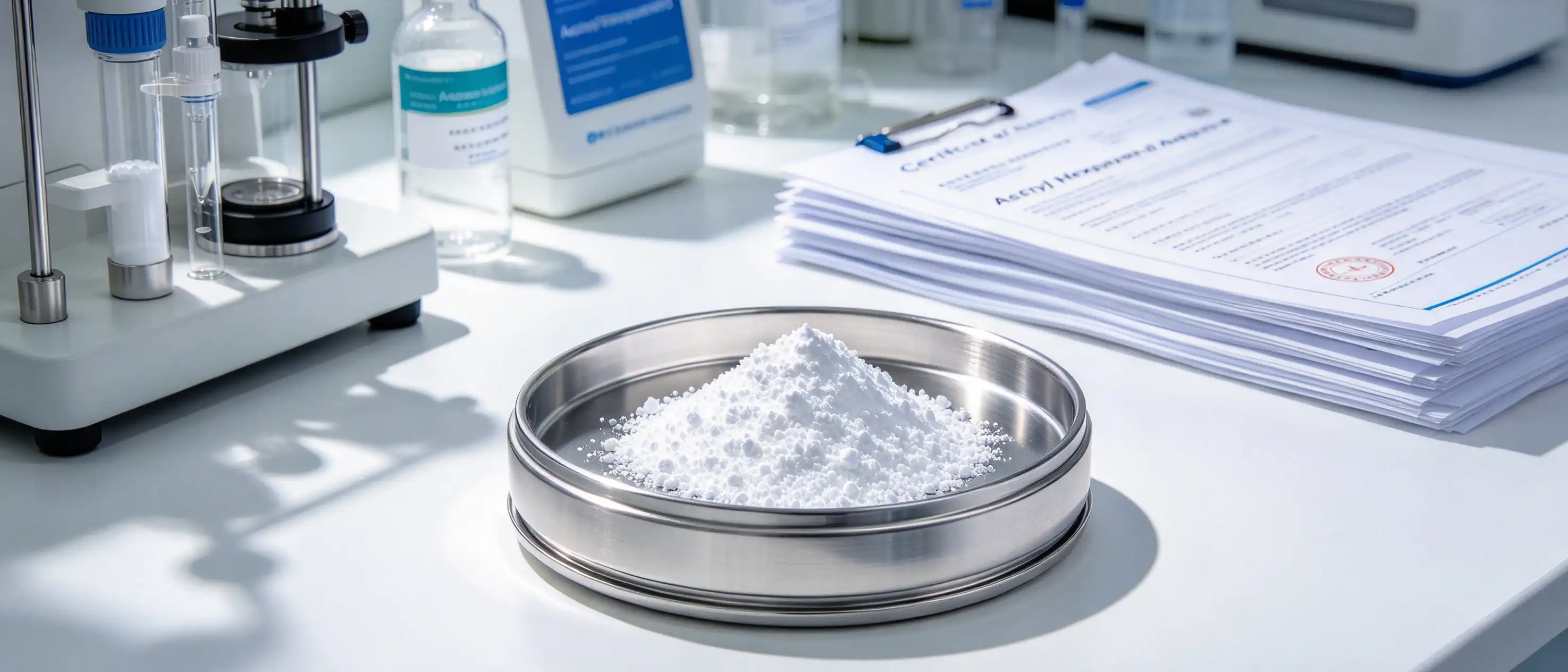
Formulating this molecule demands advanced delivery vehicles and uncompromising API purity. At Xi'an Tihealth Biotechnology Co., Ltd., we supply HPLC-verified Acetyl Hexapeptide-8 API (CAS 616204-22-9) designed specifically to overcome these formulation barriers. Our API is engineered for seamless compatibility with advanced liposomal encapsulation and phospholipid permeation enhancement vehicles. Operating under ISO9001:2015, we guarantee ≥98.0% purity with rigorously controlled residual solvents. This dossier deconstructs the synaptic biochemistry, the physics of transdermal delivery, and the forensic parameters required for successful cosmetic compounding.
1. The Molecular Architecture: Acetyl Hexapeptide-8 Kinetics
Formulating neurotransmitter modulators requires an exact understanding of synaptic chemistry and delivery physics. We divide the compounding parameters into four distinct, mathematically validated modules.
SNARE Complex Modulation & Receptor Competition
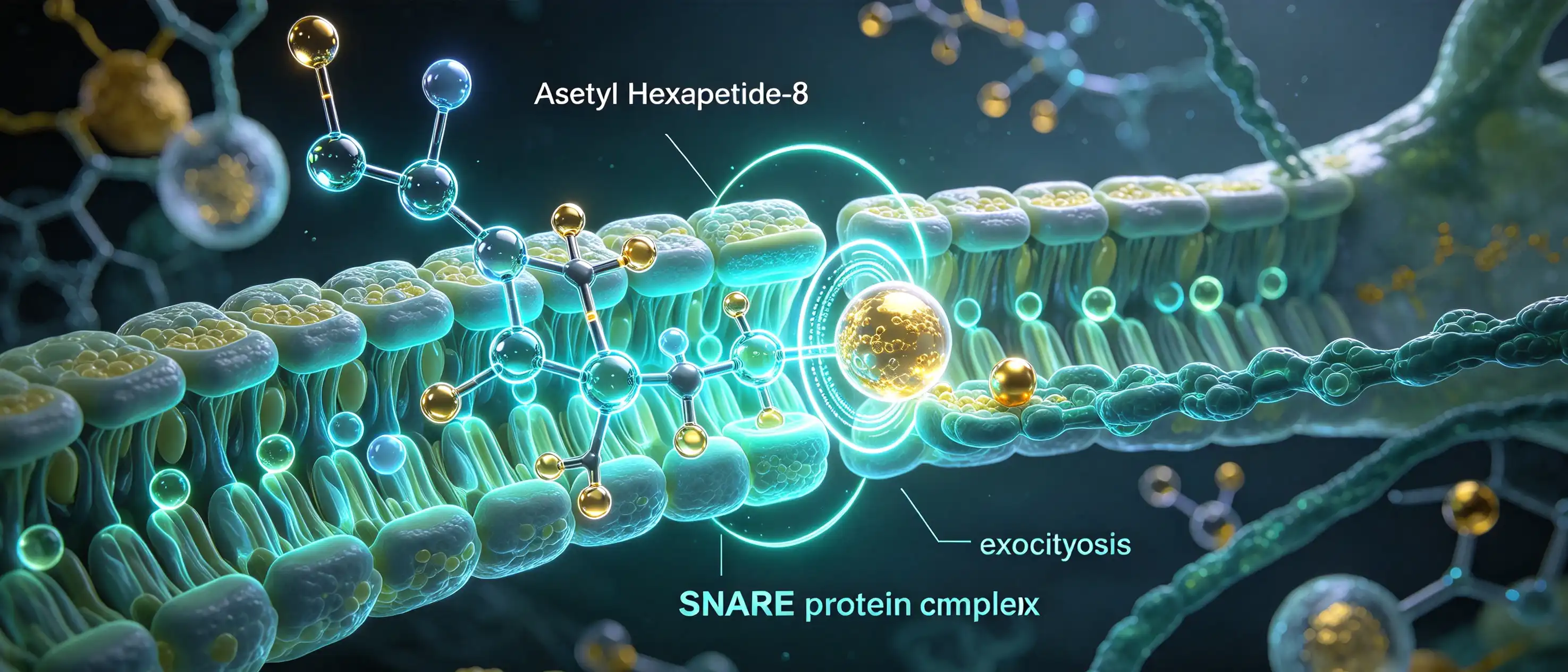
Mechanism: SNAP-25 Mimicry · ACh InhibitionDynamic expression lines are formed by repeated neuromuscular contractions triggered by the release of acetylcholine (ACh). For ACh to be released into the synaptic cleft, a protein structure known as the SNARE complex must form. Acetyl Hexapeptide-8 is a synthetic hexapeptide designed to flawlessly mimic the N-terminal end of the SNAP-25 protein. By competing for a position in the SNARE complex, the peptide destabilizes the vesicle fusion process. This prevents the exocytosis of acetylcholine, thereby attenuating muscle contraction. Application: Non-invasive aesthetic serums, targeted anti-wrinkle concentrates.
Advanced Transdermal Delivery Systems
Challenge: 800+ Dalton Weight · Stratum Corneum BarrierAs a macromolecule, Acetyl Hexapeptide-8 requires active assistance to penetrate the lipid-rich stratum corneum. Formulators must deploy this API alongside advanced delivery vehicles. The industry standard utilizes liposomal encapsulation, encasing the hydrophilic peptide within a lipophilic phospholipid bilayer that merges seamlessly with human epidermal cell membranes. Alternatively, compounding the API with potent chemical permeation enhancers (such as specific glycols or D-Limonene) temporarily fluidizes the lipid barrier, dragging the peptide down to the basal layer.
TFA Residue & Epidermal Sensitization
Challenge: Solid-Phase Peptide Synthesis (SPPS) ByproductsAcetyl Hexapeptide-8 is produced via Solid-Phase Peptide Synthesis (SPPS). This process relies heavily on Trifluoroacetic acid (TFA) for cleavage and deprotection. If procurement teams source cheap, poorly refined commodity peptides, the raw material will contain high levels of residual TFA. When formulated into an aqueous serum, TFA drastically lowers the pH and induces severe erythematous (redness) and sensitizing reactions on the user's skin. Xi'an Tihealth utilizes advanced ion-exchange chromatography to strip out TFA, yielding a highly tolerable, skin-safe API.
Structural Integrity & Analytical Compliance
Metrics: HPLC ≥98.0% · Exact Sequence VerificationPeptide synthesis is frequently plagued by incomplete sequences (missing amino acids) resulting in biologically inert molecules that inflate the perceived weight of the batch. Xi'an Tihealth guarantees a minimum High-Performance Liquid Chromatography (HPLC) assay of 98.0%, combined with Mass Spectrometry (MS) to prove the exact hexapeptide molecular weight. Delivered as a pristine white lyophilized powder, our API ensures precise, reproducible batching on your manufacturing line.
2. The Forensic Matrix: Commodity Peptides vs. Engineered APIs
Procuring synthetic peptides based on cheap per-gram pricing introduces massive toxicological and stability risks. Review the forensic divergence between commodity suppliers and Xi'an Tihealth's API specifications.
| Manufacturing Metric | Commodity Market Acetyl Hexapeptide-8 | Xi'an Tihealth API (CAS 616204-22-9) |
|---|---|---|
| Assay Verification (Purity) | Relies on outdated UV tests. Frequently contaminated with incomplete, inactive peptide sequences. | 100% HPLC verified. Exact milligram quantification yielding ≥98.0% target purity. |
| Solvent Residue (TFA) | High levels of residual Trifluoroacetic Acid causing severe epidermal irritation and pH drops. | TFA rigorously stripped via advanced ion-exchange chromatography. Clinically safe for dermal application. |
| Solubility & Clarity | Contains insoluble impurities that cause cloudiness and particulate settling in clear serum formulations. | 100% water-soluble. Dissolves into a crystal-clear solution, preserving premium aesthetic product appearance. |
| Microbial Limits | High risk of biological contamination due to poor lyophilization environments. | Processed in sterile cleanrooms. Meets strict ICH Q3D limits for total plate count and pathogens. |
API Procurement & Formulation FAQ
While both target the SNARE complex to prevent muscle contraction, their mechanisms are distinctly different. Botulinum Toxin acts irreversibly by enzymatically cleaving the SNAP-25 protein, destroying the complex. Acetyl Hexapeptide-8 is a non-toxic, reversible competitive inhibitor. It mimics the SNAP-25 protein and temporarily occupies its space in the SNARE complex, gently attenuating neurotransmitter release without causing permanent muscle paralysis.
Zero efficacy in topical applications is almost always a failure of transdermal delivery, dictated by the "500 Dalton Rule". Acetyl Hexapeptide-8 is a large macromolecule. If you formulate it in a standard, un-enhanced cream base, it cannot cross the lipid-rich stratum corneum to reach the neuromuscular junction. To achieve clinical results, formulators must integrate the API into liposomal nano-carriers or utilize aggressive chemical permeation enhancers.
Peptides are inherently heat-sensitive. Prolonged exposure to temperatures exceeding 40°C during the emulsification phase will denature the peptide bonds, destroying its biological activity. Acetyl Hexapeptide-8 must be incorporated during the cool-down phase of manufacturing, strictly below 40°C, and ideally formulated in a pH range of 5.0 to 7.0 to prevent hydrolytic degradation.
Erythema (redness) is typically caused by high levels of residual Trifluoroacetic acid (TFA), a toxic byproduct of Solid-Phase Peptide Synthesis used by cheap commodity suppliers. TFA violently drops the pH of the formulation and acts as a severe chemical irritant on the epidermis. Sourcing from Xi'an Tihealth guarantees a low-TFA, highly purified API that is clinically safe for sensitive skin applications.
Our API is supplied as a lyophilized (freeze-dried) crystalline powder. To prevent moisture agglomeration and hydrolytic degradation, it is packaged in sterile, opaque, multi-layer aluminum foil pouches or fluorinated canisters. Procurement teams must ensure the API is stored in a cool, dry, dark environment (ideally refrigerated between 2°C to 8°C for long-term storage) until the moment of compounding.
Formulate the Neural Interface.
Stop compromising your prestige anti-aging serums with low-purity, TFA-contaminated raw materials. Our Acetyl Hexapeptide-8 API guarantees exact molecular mimicry and flawless compatibility with liposomal delivery systems. Backed by HPLC data you can audit.
Request HPLC Assays & Trial SamplesDisclaimer: This technical dossier is for B2B industry education and R&D reference only. It does not constitute medical advice or promise any therapeutic effect. API handling, formulation limits, and transdermal dosages must comply with local cosmetic regulations (e.g., FDA, IFRA) and be validated by qualified toxicologists and regulatory professionals.
Send Inquiry