

Why Your Peptide Serums Turn Cloudy: Palmitoyl Pentapeptide-4 API Sourcing
Oct 15, 2026
Leave a message
The peptide materials discussed here are raw Active Pharmaceutical Ingredients (APIs) intended strictly for B2B cosmetic compounding and laboratory R&D. They are not finished consumer products. The formulation protocols discussed are for technical reference only. Formulators must independently verify transdermal toxicity, stability, and regional cosmetic compliance (FDA, EMA, IFRA) before scaling up production.
Why Your Peptide Serums Turn Cloudy: Sourcing Palmitoyl Pentapeptide-4 API
A practical guide to overcoming lipophilic solubility issues and preventing phase separation in anti-aging compounding.
But if you ask a production chemist about it, you'll hear a different story. This peptide is notoriously frustrating to work with. Standard peptides dissolve easily in water. However, Palmitoyl Pentapeptide-4 has a 16-carbon fatty acid tail attached to it. That lipid modification is intentional-it drags the peptide through the skin's fat barrier. But it also makes the raw powder extremely hydrophobic.
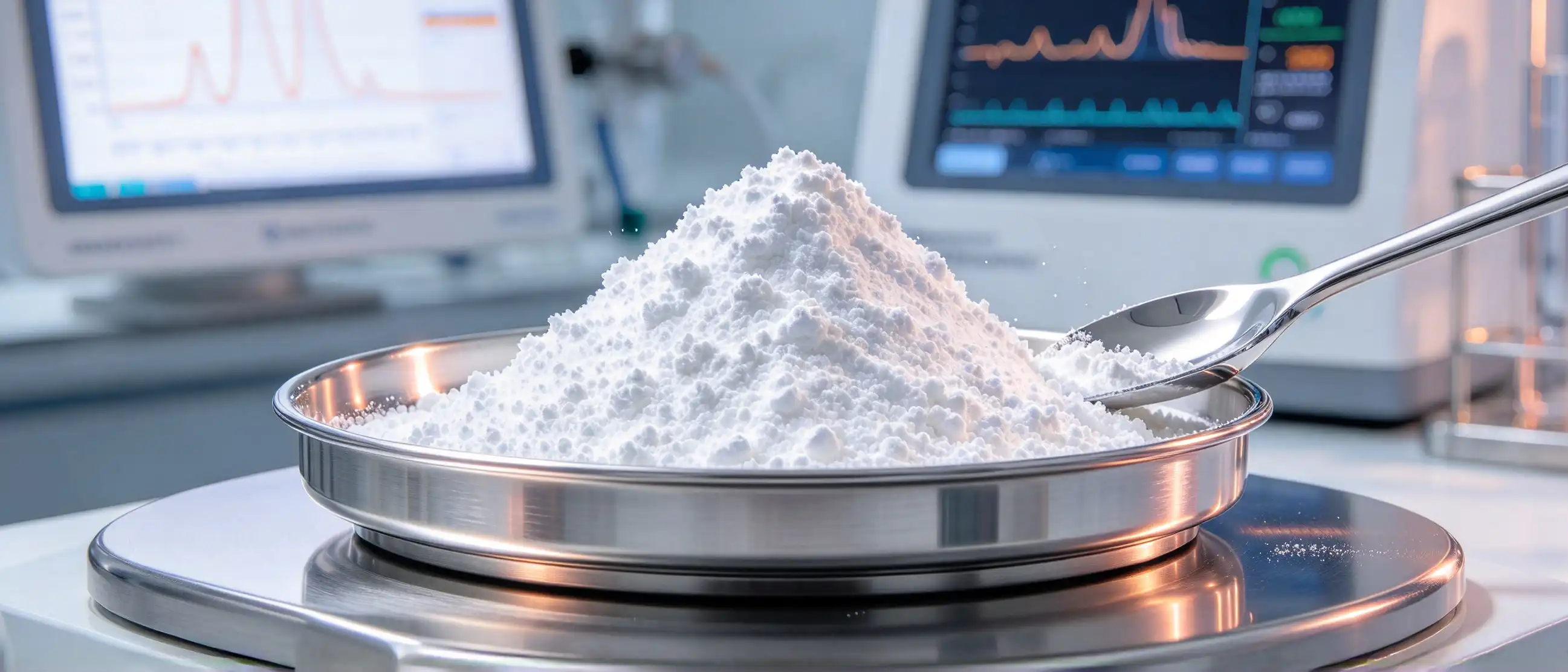
I see this happen constantly: a brand buys the raw API powder, drops it straight into a water-based serum vat, and it immediately crashes out. It clumps up, floats to the top, and turns a clear serum into a cloudy mess. The active ingredient never actually solubilizes.
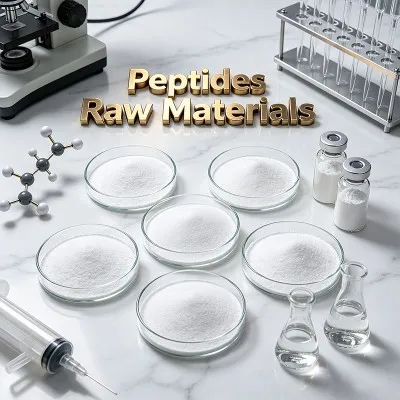
To fix this, you need two things: high-purity material and specific dispersion protocols. At Xi'an Tihealth, we provide Palmitoyl Pentapeptide-4 API (CAS 214047-00-4) testing at ≥98.0% via HPLC. More importantly, our tech team actually tells you how to get it into your formula without ruining the batch. Here is a breakdown of how the molecule works and how we keep it stable on the manufacturing floor.
1. Formulation Realities: Working with Lipid-Modified Peptides
You cannot treat a lipophilic peptide like a standard water-soluble active. Here are the four key technical factors we monitor during API production and downstream compounding.
The Biological Mechanism: Tricking Fibroblasts
Action: Sub-fragment SignalingPalmitoyl Pentapeptide-4 is actually a tiny piece of Type I collagen. When you apply it to the skin, the local fibroblasts (the cells that make collagen) detect it. They assume the skin's collagen matrix is breaking down because these fragments are present. In response, they start synthesizing new Type I, III, and IV collagen to "repair" the perceived damage. It effectively redensifies the dermis, which is why it works so well for static, deep-set wrinkles.
Solving the Solubility Problem
Protocol: Glycol Pre-dispersionBecause of the fatty acid tail, you have to force it into solution. We advise our clients to never add the dry powder directly to water. Instead, create a pre-mix using a glycol solvent (like Butylene Glycol or Glycerin) and a mild surfactant (like Polysorbate 20). Mix this under gentle heat (around 40°C) until it is completely transparent. Only then should you fold this pre-dispersion into the main aqueous phase of your emulsion during the cool-down stage.
The Acidic pH Conflict
Challenge: Formulation AcidityA common mistake is trying to stack this peptide with pure L-Ascorbic Acid (Vitamin C) or heavy AHAs (like Glycolic Acid). Those acids require a very low pH (usually under 3.5) to penetrate the skin. At that acidity level, peptide bonds break apart. If you want to use Palmitoyl Pentapeptide-4 in a brightening serum, you have to use a stabilized Vitamin C derivative (like Ascorbyl Glucoside) so you can keep the final batch pH safely between 5.0 and 7.0.
Why Purity Actually Matters Here
Metrics: HPLC ≥98.0% · Removing TFAGrafting a lipid tail onto a peptide is difficult. Cheap suppliers often leave incomplete peptide sequences in the batch, or they fail to attach the palmitic acid properly. This inflates the weight of the powder but gives you biologically useless material. We test our batches via HPLC to ensure ≥98.0% purity of the exact target molecule. We also use ion-exchange processes to pull out residual Trifluoroacetic acid (TFA), which prevents sudden pH drops and skin irritation when you mix it.

2. Sourcing Comparison: What to Check on the COA
If your current supplier is just sending you a powder bag without technical backing, you are taking a risk on the production line. Here is how our API specs differ from generic market materials.
| Quality Metric | Generic Synthetic Peptides | Xi'an Tihealth API (CAS 214047-00-4) |
|---|---|---|
| Assay Verification | Often contains unattached lipid chains and short fragments that don't penetrate skin. | 100% HPLC verified. Exact mass quantification yielding ≥98.0% target molecule. |
| Technical Support | Powder shipped with no formulation data. Leads to cloudy serums and wasted batches. | We provide exact pre-dispersion solvent ratios so it integrates smoothly into your tanks. |
| Solvent Residue (TFA) | Leaves high levels of Trifluoroacetic Acid in the powder, causing skin redness for users. | TFA is stripped out via ion-exchange. Creates a mild, skin-safe API for sensitive products. |
| Microbial Bioburden | Freeze-drying in open labs leads to variable bacteria counts. | Lyophilized in ISO9001 cleanrooms. Total plate counts easily pass strict cosmetic limits. |
Lab Operations FAQ
It's because of the palmitoyl group (the fatty acid tail). That tail makes the molecule highly lipophilic (fat-loving). It physically repels water. To dissolve it, you must first create a pre-mix using a glycol solvent (like Butylene Glycol) and a solubilizer before introducing any water to the mixture.
Only up to a point. Peptides are essentially short proteins, and proteins denature under high heat. While gentle warming (around 40°C) helps the glycol pre-dispersion process, you should never expose the peptide to temperatures above 45°C. Always add the peptide blend during the final cool-down phase of your emulsion.
The peptide bonds will start to break apart through a process called acid hydrolysis. If you are trying to formulate this peptide alongside strong acids like Glycolic Acid or L-Ascorbic Acid, the high acidity will simply chew up the peptide, and it won't do anything for the skin. Keep your final batch pH between 5.0 and 7.0.
They do completely different things. Argireline relaxes muscles to prevent dynamic expression lines (like Botox). Palmitoyl Pentapeptide-4 tells fibroblasts to build new collagen to fill in static wrinkles. A lot of our clients actually formulate them together to cover both mechanisms in one premium product.
We ship it as a dry, freeze-dried powder in sealed containers. To maintain the 24-month shelf life, you need to keep the raw material in a cool, dry place away from direct light. Once you open the container on the production floor, make sure to seal it tightly so it doesn't pull moisture from the ambient air.
Get the Right Ingredients and the Right Instructions.
Don't waste lab time trying to force cheap powders to dissolve. Our Palmitoyl Pentapeptide-4 API comes with exact HPLC verification and the technical support you need to get it cleanly into your water phase.
Request HPLC Data & Pre-Dispersion GuidesDisclaimer: The technical notes provided above are for B2B industry education and R&D reference only. They do not constitute medical advice or promise therapeutic effects. Compounding limits and dosages must be validated by qualified toxicologists according to regional cosmetic regulations.
Send Inquiry