

Stop Carbomer Chelation: Sourcing 99.0% Copper Tripeptide-1 (GHK-Cu) API
Oct 07, 2026
Leave a message
The peptide compounds and Active Pharmaceutical Ingredients (APIs) described herein are supplied strictly for authorized B2B OEM/ODM cosmetic manufacturing and clinical R&D. They are not finished consumer dermatological products. The information provided focuses on formulation chemistry and extracellular matrix kinetics. All downstream compounding, dermal toxicity testing, and cosmetic label claims must strictly comply with the regulations (e.g., FDA, EMA, IFRA) of the target regional market prior to commercial distribution.
Stop Carbomer Chelation: Sourcing 99.0% Copper Tripeptide-1 (GHK-Cu) API
Eradicate serum discoloration and viscosity loss. A master procurement guide to extracellular matrix reorganization and minimal free-copper kinetics.
However, for R&D formulators, commodity GHK-Cu is an absolute chemical liability. The primary failure point in copper peptide formulation is chelation and matrix degradation. Standard cosmetic thickeners, specifically polyacrylic acid polymers like Carbomer, react violently with free copper ions (Cu²⁺). If a procurement team sources cheap, poorly synthesized GHK-Cu containing excess unbound copper, the serum will undergo rapid polymer cross-linking failure. Within weeks, the viscosity crashes, transforming a premium gel into a watery liquid, while the signature sapphire blue color shifts to a muddy, oxidized green-brown.
Clinical efficacy demands exact stoichiometric synthesis. At Xi'an Tihealth Biotechnology Co., Ltd., we engineer our API to solve this specific bench reality. We supply highly purified collagen tripeptide and GHK-Cu powder portfolios with strictly controlled, minimal free copper ions. Operating under ISO9001:2015, we guarantee hydrogel and serum matrix stability. This dossier deconstructs the pharmacokinetics of GHK-Cu, the physics of carbomer chelation, and the forensic parameters required for successful cosmetic compounding.
1. The Molecular Architecture: Copper Tripeptide-1 (CAS 2239-67-0)
Formulating with transition metal complexes requires precise chemical engineering. We divide the compounding parameters of GHK-Cu into four distinct, mathematically validated modules.
Extracellular Matrix (ECM) Reorganization
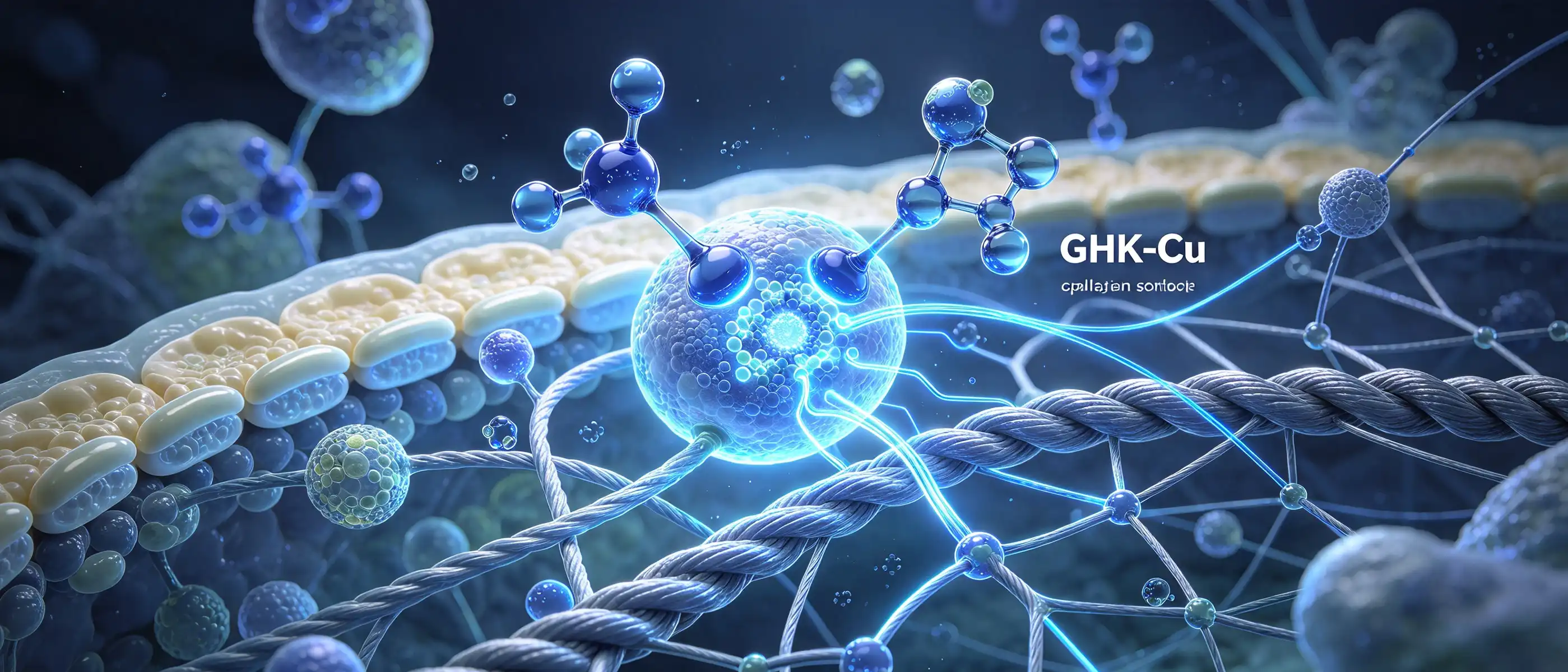
Mechanism: Fibroblast Stimulation · MMP ModulationGHK-Cu is a naturally occurring human tripeptide (glycyl-L-histidyl-L-lysine) that strongly binds copper ions. It operates directly at the cellular level by upregulating fibroblast production, triggering the aggressive synthesis of collagen (Type I and III), elastin, and glycosaminoglycans (like hyaluronic acid). Furthermore, it modulates the activity of matrix metalloproteinases (MMPs), effectively dismantling damaged scar tissue and replacing it with healthy, organized dermal scaffolding. Application: Post-operative recovery gels, intensive anti-wrinkle serums.
Polymer Chelation & Viscosity Collapse
Challenge: Carbomer Antagonism · Ionic InterruptionMost aesthetic serums utilize Carbomer or sodium hyaluronate as structural thickeners. These polymers are highly sensitive to electrolytes. When commodity GHK-Cu containing elevated levels of unbound, free copper ions (Cu²⁺) is introduced, the copper acts as a chelating agent. It forcefully cross-links with the carboxyl groups of the polymer, causing the entire gel network to collapse into a watery fluid within hours. Xi'an Tihealth engineers our API with an exact stoichiometric ratio, locking the copper securely within the peptide structure to guarantee rheological stability.
Oxidative Discoloration & Ingredient Conflict
Challenge: pH Sensitivity · Reduction ReactionsThe brilliant "Blue Sapphire" color of GHK-Cu is its commercial signature. However, copper is a highly active transition metal. If formulated alongside strong reducing agents (such as L-Ascorbic Acid / Vitamin C), a violent oxidation-reduction reaction occurs. The Cu²⁺ is reduced to Cu⁺, instantly mutating the elegant blue serum into a muddy, unmarketable brown. Formulation requires strict segregation from low-pH acids and the utilization of specific, non-ionic emulsifiers.
Structural Integrity & Analytical Compliance
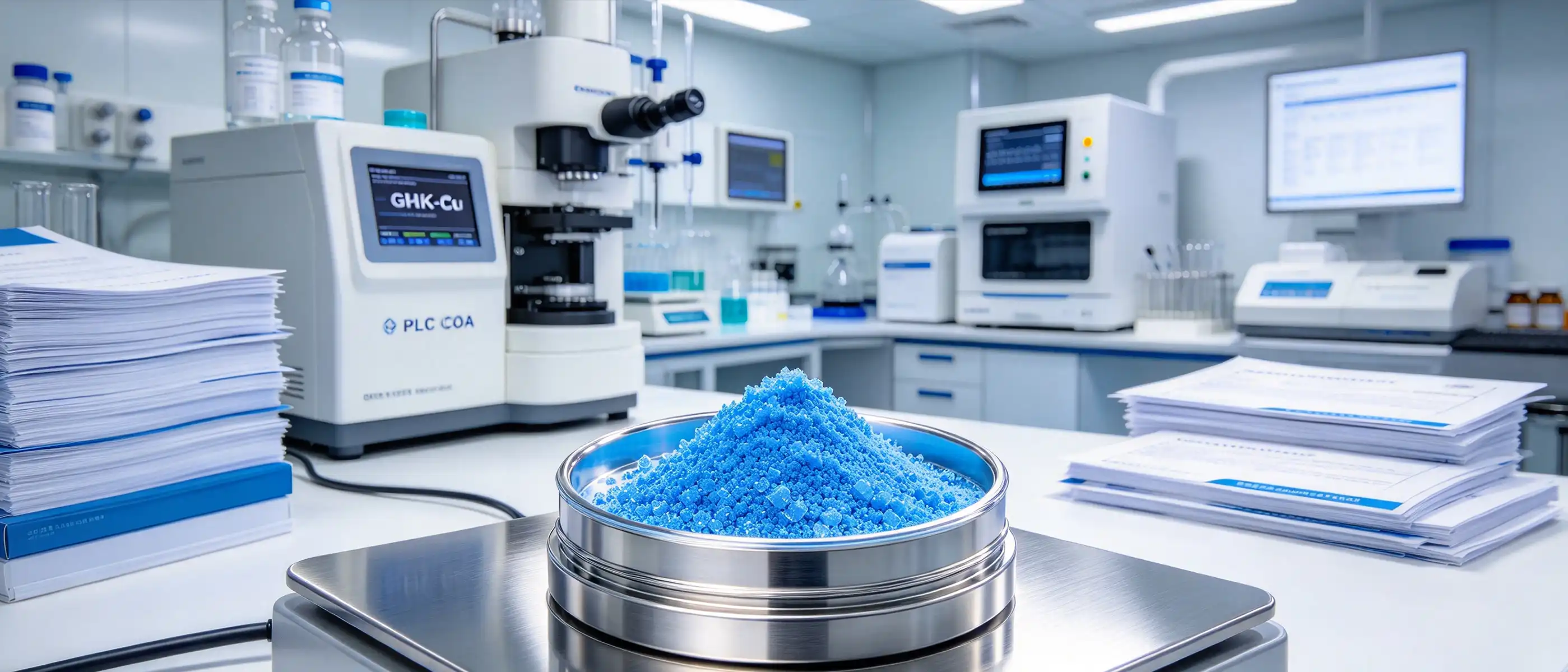
Metrics: HPLC ≥99.0% · Lyophilized PurityPeptide synthesis is fraught with incomplete sequencing and residual trifluoroacetic acid (TFA). Xi'an Tihealth guarantees a minimum High-Performance Liquid Chromatography (HPLC) assay of 99.0%. Delivered as a deeply concentrated blue lyophilized (freeze-dried) powder, our API is subjected to rigorous screening for heavy metals and solvent residues, meeting strict European and North American toxicological thresholds for prolonged dermal exposure.
2. The Forensic Matrix: Commodity Peptides vs. Engineered APIs
Procuring peptides based on cheap per-gram pricing guarantees formulation failure. Review the forensic divergence between commodity suppliers and Xi'an Tihealth's API specifications.
| Manufacturing Metric | Commodity Market GHK-Cu | Xi'an Tihealth GHK-Cu API |
|---|---|---|
| Free Copper Ion Content | Unregulated. High free copper triggers immediate viscosity collapse in Carbomer serums. | Strictly minimized. Stoichiometrically locked to guarantee hydrogel and serum matrix stability. |
| Assay Verification (Purity) | Relies on outdated UV tests. Frequently contaminated with incomplete peptide chains. | 100% HPLC verified. Exact milligram quantification yielding ≥99.0% target purity. |
| Aesthetic Appearance | Dull, pale blue or greenish powder indicating severe oxidation or improper lyophilization. | Brilliant "Blue Sapphire" lyophilized crystalline powder. Ensures striking final product aesthetics. |
| Solvent Residue (TFA) | High levels of Trifluoroacetic Acid (TFA) causing severe epidermal irritation and pH drops. | TFA rigorously stripped via advanced chromatography. Clinically safe for high-dose dermal application. |
API Procurement & Formulation FAQ
Viscosity loss is the direct result of polymer chelation. Common thickeners like Carbomer rely on electrostatic repulsion to maintain a gel network. If your GHK-Cu supplier provides raw material with excessive free copper ions, those ions aggressively bind to the polymer chains, collapsing the structure. Formulators must source APIs with strictly controlled minimal free copper, or pivot to non-ionic thickeners like Xanthan Gum or Sclerotium Gum.
Peptide synthesis frequently leaves behind truncated, incomplete amino acid sequences and toxic solvents. An HPLC purity of ≥99.0% guarantees that the tripeptide chain (Gly-His-Lys) is fully intact and functionally capable of binding to fibroblast receptors to initiate extracellular matrix repair, while simultaneously ensuring dermal safety.
No. Combining GHK-Cu with strong reducing agents like pure L-Ascorbic Acid triggers an immediate oxidation-reduction reaction. The Vitamin C will reduce the Cu²⁺ to Cu⁺, destroying the efficacy of both actives and instantly turning your formulation into a muddy brown liquid. If brightening is required, utilize stable, non-acidic derivatives or isolate the actives in dual-chamber packaging.
Color shifting is an indicator of API degradation. It occurs due to severe pH fluctuations (GHK-Cu is most stable between pH 5.5 and 7.0), exposure to intense UV light without proper opaque packaging, or interaction with incompatible chelating agents (like EDTA) in the formulation base that strip the copper away from the peptide chain.
We maintain strict control over the lyophilization (freeze-drying) kinetics and the exact stoichiometric bonding of the copper ions during synthesis. By locking the molecular ratio under ISO9001:2015 standards, we ensure that every gram of our API delivers the identical, striking "Blue Sapphire" hue, completely eliminating visual variance on the manufacturing line.
Formulate the Dermal Matrix.
Stop compromising your prestige cosmetic serums with unstable, high-free-copper raw materials. Our GHK-Cu API guarantees rheological stability and exact pharmacological dosing. Backed by HPLC data you can audit.
Request HPLC Assays & Trial SamplesDisclaimer: This technical dossier is for B2B industry education and R&D reference only. It does not constitute medical advice or promise any therapeutic effect. API handling, formulation limits, and dosages must comply with local cosmetic regulations (e.g., FDA, IFRA) and be validated by qualified toxicologists and regulatory professionals.
Send Inquiry