

Reversing Endothelial Stiffening: The Vascular Elasticity & Lipid Emulsification Matrix
Nov 21, 2026
Leave a message
The pharmacokinetic mechanisms, endothelial lipid clearance pathways, and Active Nutritional Ingredients (ANIs) discussed in this bench report are provided strictly for B2B nutraceutical compounding, functional food manufacturing, and R&D. They do not constitute clinical medical treatments for advanced atherosclerosis, coronary artery disease, or severe hypertension. All downstream OEM/ODM compounding, vascular elasticity claims, and dosage labeling must strictly comply with the dietary regulations of the target regional market (e.g., FDA, EFSA) prior to commercial distribution.
Reversing Endothelial Stiffening: The Vascular Elasticity & Lipid Emulsification Matrix
A forensic R&D evaluation of macrophage foam cell formation, arterial calcification, and why fragmented omega-3 supplements fail to restore true vascular wall flexibility.
The cardiovascular supplement industry is obsessed with lowering systemic cholesterol. While reducing circulating lipids is beneficial, it fundamentally ignores the actual mechanical failure that triggers cardiovascular events: the hardening and stiffening of the vascular wall (Arteriosclerosis).
The clinical reality of vascular aging is driven by a highly destructive cascade. When low-density lipoproteins (LDL) become oxidized, they penetrate the endothelial lining. Macrophages consume this oxidized LDL, transforming into necrotic "foam cells" that form rigid plaques. Concurrently, the smooth muscle cells surrounding the arteries lose their elasticity, causing systemic blood pressure to spike as the vessels can no longer expand and contract to accommodate hemodynamic shear stress. Lowering cholesterol does not automatically soften an already calcified, rigid artery.
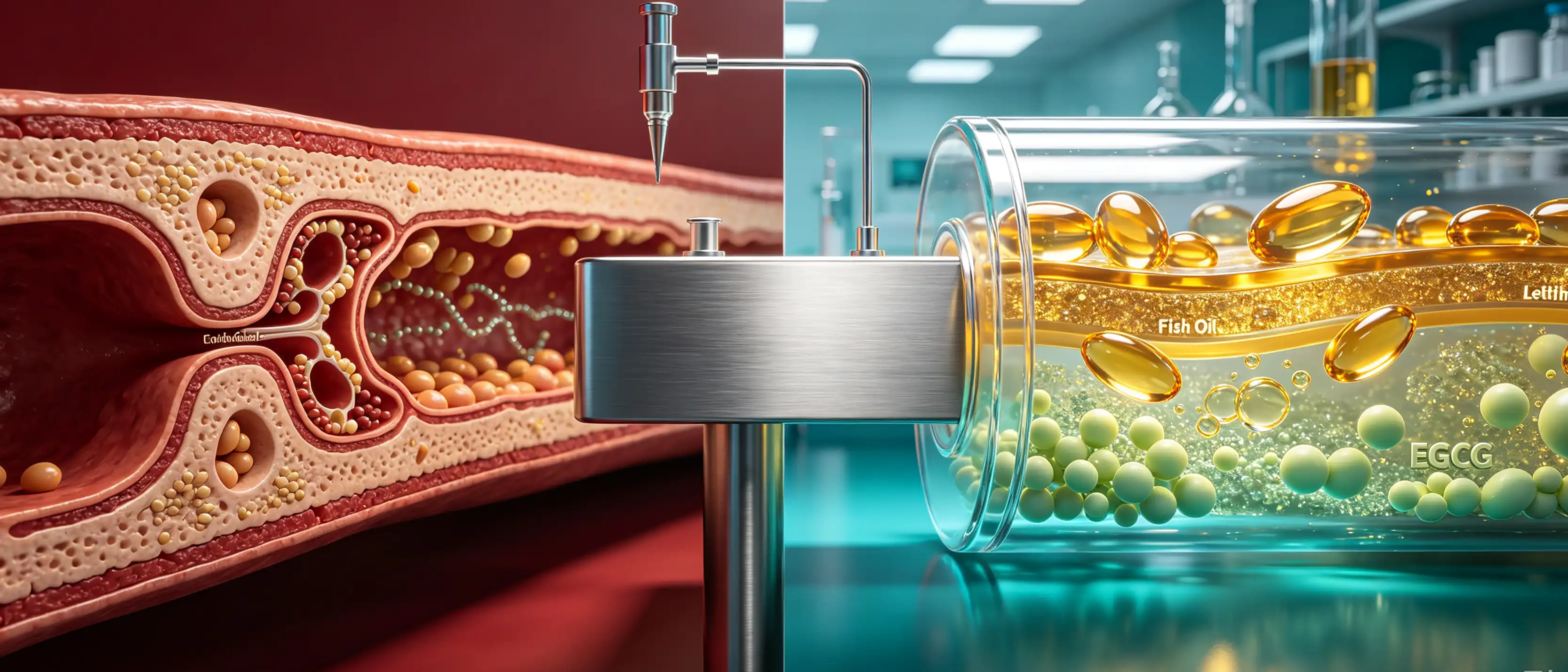
At Xi'an Tihealth, we engineer complete vascular wall restoration. To effectively Soften Blood Vessels & Enhance Elasticity, formulators must deploy a tri-phasic matrix: Lecithin for physical lipid emulsification, high-yield EPA/DHA (Fish & Algal Oil) for smooth muscle flexibility, and Green Tea Extract (EGCG) to abruptly halt lipid oxidation.
Below is the precise technical directive our operations team uses to deconstruct arterial plaque formation, optimize trans-membrane lipid integration, and execute high-performance OEM/ODM compounding. You can submit your custom formulation brief here to partner directly with our extraction engineers.
1. The Biochemical Blueprint: The Vascular Softening Matrix
Lecithin (The Biological Detergent)
Target: Lipid Emulsification & Plaque ClearanceCholesterol and triglycerides are highly hydrophobic; they do not dissolve in blood. Without a proper transport mechanism, they precipitate out of suspension and adhere to the arterial walls, creating rigid atheromatous plaques. Lecithin, standardized for high Phosphatidylcholine (PC) content, acts as a systemic biological surfactant. Its amphiphilic structure (possessing both water-loving and fat-loving poles) aggressively emulsifies circulating lipids into microscopic micelles. This prevents lipid adherence, essentially acting as a "detergent" that washes the vascular pathways clear and supports reverse cholesterol transport back to the liver for excretion.
EPA & DHA (The Elasticity Catalysts)
Target: Endothelial Membrane FluiditySourced from premium Fish Oil and high-purity Algal Oil, Eicosapentaenoic Acid (EPA) and Docosahexaenoic Acid (DHA) provide profound structural benefits beyond simple triglyceride reduction. These long-chain polyunsaturated fatty acids integrate directly into the phospholipid bilayer of the vascular endothelial cells. Because their molecular structure is highly "kinked," they drastically increase the mechanical fluidity and flexibility of the cell membrane. This prevents the endothelial wall from becoming rigid and brittle. Furthermore, EPA is metabolized into specialized pro-resolving mediators (Resolvins) that actively halt localized vascular inflammation, preventing the continuous scarring that leads to arterial stiffening.
Green Tea Extract (The Oxidation Shield)
Target: Inhibition of oxLDL & Macrophage Foam CellsNative LDL cholesterol is relatively harmless; it only becomes pathogenic when it is oxidized into oxLDL. Macrophages engorge themselves on oxLDL, transforming into necrotic foam cells that form the core of atherosclerotic plaques. Green Tea Extract, specifically standardized for Epigallocatechin Gallate (EGCG), serves as an uncompromising molecular shield. EGCG aggressively intercepts reactive oxygen species (ROS) in the bloodstream, halting the oxidation of LDL before it can penetrate the endothelium. Additionally, EGCG upregulates endothelial nitric oxide synthase (eNOS), signaling the smooth muscles to relax and further reducing hemodynamic shear stress on the vascular walls.
2. Core API Technical Data Sheet (R&D Spec Check)
To ensure your final cardiovascular product achieves regulatory compliance and profound clinical efficacy, mandate these pharmaceutical-grade specifications on your procurement sheets.
| API Nomenclature | Xi'an Tihealth Specification | Test Method & R&D Advantage |
|---|---|---|
| Lecithin (Soy or Sunflower) | ≥ 50.0% Phosphatidylcholine (PC) | HPLC. Ensures a concentrated payload for potent systemic lipid emulsification and phase stability. |
| Marine Fish Oil / Algal Oil | TOTOX Value ≤ 10 | AOCS. Strict total oxidation limits prevent the oil from becoming a pro-oxidant and damaging the very arteries it is meant to heal. |
| Green Tea Extract | ≥ 50% EGCG / ≤ 1.0% Caffeine | HPLC. High EGCG halts lipid oxidation. Low caffeine is mandatory to prevent cardiac overstimulation in hypertensive demographics. |
| Algal DHA Powder | 10% - 20% CWS Micro-encapsulated | Gas Chromatography. Cold Water Soluble matrix prevents lipid oxidation in dry-mix formulations and masks marine odors. |
| Heavy Metals (Pb, As, Hg) | ≤ 1.0 ppm | ICP-MS. Absolute necessity for marine lipids to guarantee zero mercury contamination and clinical safety. |
3. Application: OEM/ODM Custom Manufacturing Solutions
A synergistic matrix combining botanicals and marine lipids requires highly specialized delivery formats to prevent cross-reactivity and mask pungent olfactory notes. Here is how Xi'an Tihealth executes complex vascular formulations across five premium OEM/ODM formats (you can submit your custom formulation brief here):
1. High DHA+EPA Algal Oil Softgel
The Vegan Alternative & Anaerobic Mastery: Marine lipids are highly susceptible to rancidity. During softgel encapsulation, we employ strict Argon/Nitrogen blanketing to purge oxygen from the compounding machinery. Utilizing premium Algal Oil offers a clean, heavy-metal-free, plant-based source of DHA/EPA, catering to vegan demographics while maintaining supreme oxidative stability over a 24-month shelf life.
2. Lecithin Vascular Softgel
The Emulsification Carrier: Formulating pure Lecithin requires precise temperature control to maintain the integrity of the Phosphatidylcholine (PC) phase. By suspending Lecithin in a carrier oil matrix within a softgel, we prevent moisture ingress and deliver a highly concentrated biological detergent that rapidly disperses in gastric fluid, maximizing intestinal lipid emulsification.
3. Fish Oil & Lecithin Filled Candy
The Organoleptic Triumph: Combining Fish Oil and Lecithin into a chewable gummy or liquid-filled candy presents severe flavor-masking challenges. We utilize the Lecithin itself as an emulsifier to create a highly stable, uniform micro-emulsion of the Fish Oil. Paired with natural citrus acidulants, this entirely neutralizes the "fishy" olfactory blowback, delivering a high-compliance treat for consumer demographics resistant to swallowing large pills.
4. Green Tea Extract Solid Drink
The Dispersion & Astringency Solution: High-EGCG Green Tea Extract is notoriously astringent (bitter) and can clump in cold water. We employ advanced fluid-bed agglomeration and micro-encapsulation techniques. The resulting powder disperses uniformly in cold water without forming a sludge, while specialized physical masking layers prevent the intense bitter polyphenols from overwhelming the taste receptors.
5. Green Tea Extract Jelly
The Rheological Synergy: Integrating high doses of botanical polyphenols into a hydrocolloid network (carrageenan or pectin) can alter the isoelectric point, causing the jelly to crash or leak water (syneresis) over time. By tightly engineering the pH and utilizing precise buffer systems, we maintain a perfectly textured, structurally stable stick-pack jelly that delivers a potent antioxidant payload.
Frequently Asked Questions (Formulator FAQ)
Marine lipids are highly hydrophobic. When a standard fish oil softgel bursts in the stomach, the oil floats on top of the gastric fluid, causing delayed absorption and the infamous "fish burp" regurgitation. Lecithin acts as a potent biological emulsifier. By formulating them together, the Lecithin instantly emulsifies the EPA/DHA into microscopic micelles upon contact with stomach acid, dramatically accelerating intestinal absorption and entirely eliminating gastric blowback.
The target demographic for vascular softening and elasticity products often suffers from underlying hypertension or compromised cardiovascular health. Standard green tea extracts contain high levels of caffeine, which acts as a central nervous system stimulant and vasoconstrictor, elevating heart rate and blood pressure-directly counteracting the formulation's goals. We mandate Decaffeinated Green Tea Extract (≤ 1.0% Caffeine) to deliver the massive antioxidant power of EGCG without triggering cardiac overstimulation.
Absolutely. In fact, Algal Oil is becoming the preferred B2B choice for premium formulations. Fish obtain their Omega-3s by consuming algae; by extracting directly from the source (Schizochytrium sp.), we eliminate the severe heavy metal (mercury) accumulation risks associated with marine fish. Algal Oil provides exceptionally high-purity DHA, is completely vegan-compliant, and exhibits superior oxidative stability when handled correctly in our manufacturing facilities.
Required Scientific Corroboration
Anchor your regulatory dossiers in peer-reviewed cardiovascular pharmacognosy literature:
- American Journal of Clinical Nutrition: Omega-3 fatty acids and endothelial function. Evidence supporting the role of EPA/DHA in improving erythrocyte membrane fluidity and cellular elasticity.
- Journal of Nutritional Biochemistry: Epigallocatechin gallate (EGCG) inhibits oxidized LDL-induced macrophage foam cell formation. Details the mechanism by which EGCG halts the primary driver of arterial plaque stiffening.
- Lipids in Health and Disease: The role of phosphatidylcholine in reverse cholesterol transport. Clinical demonstration of Lecithin's capacity to emulsify lipids and clear vascular pathways.
The Manufacturing Verdict: Stop Relying on Generic Omega-3s.
The premium cardiovascular market demands comprehensive hemodynamic restoration, not just lipid reduction. Engineer for macrophage foam cell inhibition. Formulate for endothelial flexibility. Ready to deliver actual clinical vascular softening?
Request Complete Vascular Matrix OEM PricingSend Inquiry