

Why Your L-Carnosine Clumps: Sourcing Anti-Glycation API Powder
Oct 21, 2026
Leave a message
L-Carnosine is a naturally occurring dipeptide. The raw Active Pharmaceutical Ingredients (APIs) discussed in this bench note are supplied strictly for authorized B2B supplement compounding, cosmetic formulation, and in-vitro R&D. They are not finished consumer products. Procurement teams assume all liability for ensuring their encapsulation procedures, excipient blending, and downstream labeling comply with regional pharmacopeial and dietary supplement regulations (e.g., FDA, EFSA).
Why Your L-Carnosine Clumps: Sourcing Anti-Glycation API Powder
Let's talk about manufacturing bottlenecks. If your solid beverage sachets are turning into hard bricks or your encapsulator is jamming, here is what is actually going wrong with your API supply.
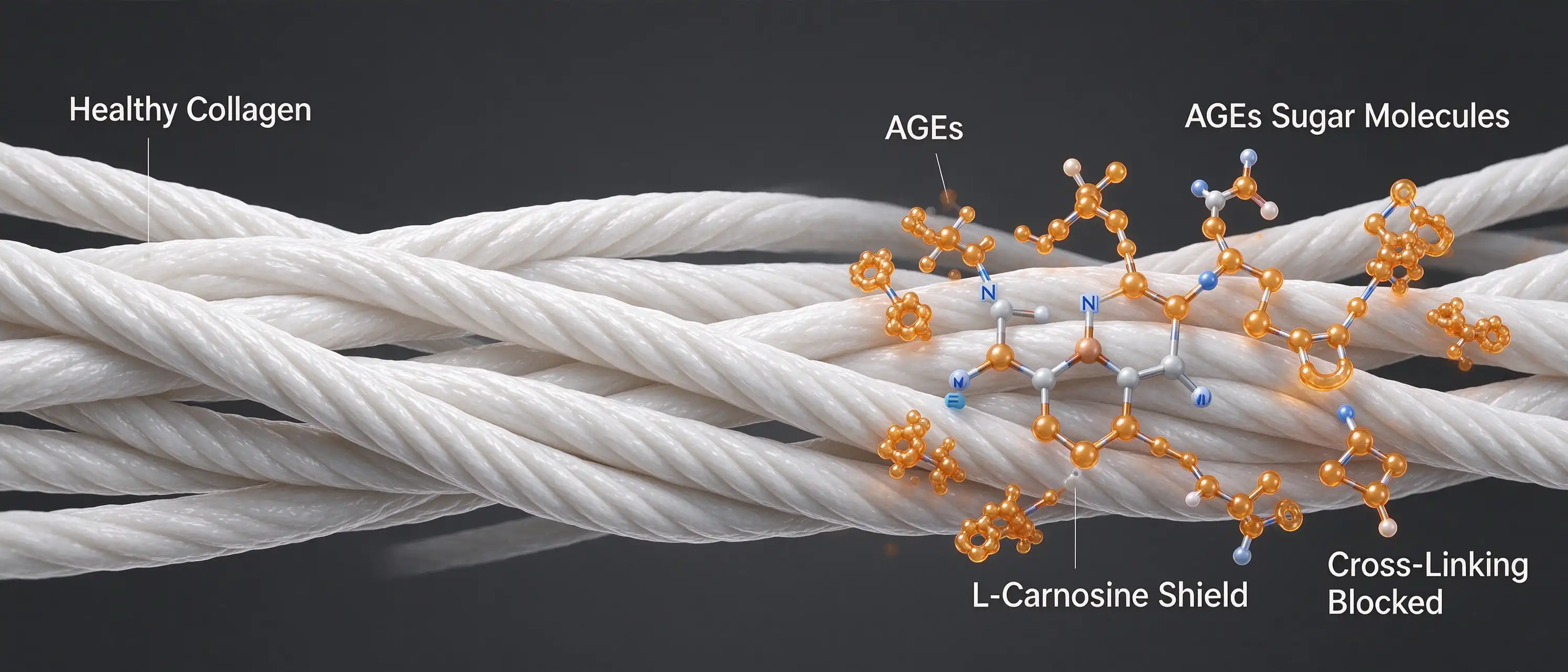
L-Carnosine is heavily marketed by brands as the ultimate anti-glycation agent. The science is solid: it targets Advanced Glycation End-products (AGEs) by acting as a sacrificial dipeptide. It binds to rogue sugars in the body before those sugars can attach to-and cross-link-your collagen.
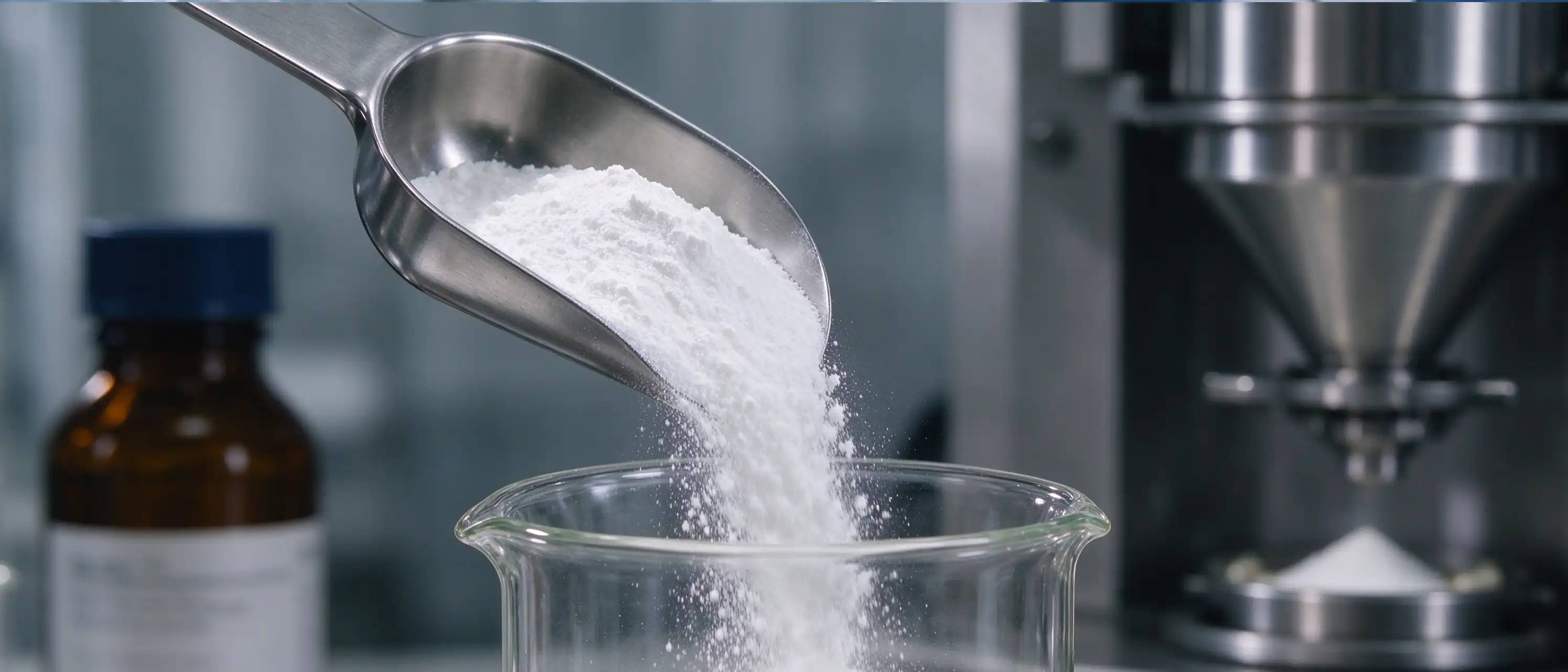
But for formulation chemists and floor managers, L-Carnosine is a massive headache. The raw material is notoriously hygroscopic. It pulls moisture straight out of the ambient air. If you've ever tried running standard, poorly processed L-Carnosine powder through a high-speed encapsulator, you know exactly what happens. Within twenty minutes, the powder turns sticky, gums up the dosing pins, and jams the hopper. If you are packing it into solid beverage stick-packs, the powder often turns into a hard brick on the shelf before the expiration date.
You can't just buy this API based on a 99% purity spec; you have to buy it based on flowability. At Xi'an Tihealth, we put our L-Carnosine API Powder (CAS 305-84-0) through advanced moisture-control processing. We alter the particle granulometry so it actually runs smoothly on a commercial line. Here is the breakdown of the molecule and the physical specs you need to check.
1. The 3 Bench Realities of Sourcing L-Carnosine
The Biological Mechanism: The Sacrificial Target
Glycation happens when excess sugars in the bloodstream react with proteins (like collagen and elastin), creating AGEs. This process stiffens the tissue, causing wrinkles and cardiovascular aging. L-Carnosine (Beta-alanyl-L-histidine) stops this by being a sacrificial target. Because of its specific molecular structure, sugars prefer to bind to L-Carnosine instead of your skin's collagen. The body then excretes the bound complex. For this to work systemically, the dipeptide must be absorbed intact, which means you need high-purity material with zero heavy metal contamination.
The Hygroscopic Nightmare & Flowability
Most cheap L-Carnosine comes as a fine, dusty powder. The finer the powder, the more surface area it has to absorb ambient humidity. If your facility isn't running massive dehumidifiers, that powder gets sticky fast. We solve this during the final crystallization and milling phase. By strictly controlling the particle size distribution and applying advanced moisture-control drying processes, our API maintains a free-flowing granular structure. It feeds cleanly into capsule hoppers and stays stable in solid beverage blends without bricking.
pH Shifts in Liquid Formulations
If you are formulating anti-aging liquid shots or topical cosmetics, L-Carnosine is highly water-soluble, which is great. However, it is naturally somewhat basic in solution. If you dump a high percentage of it into an unbuffered liquid, it will pull the pH up. If you are stacking it with acidic ingredients (like Vitamin C or certain preservatives), you will see precipitation or degradation. You have to buffer the water phase properly before adding the API.
2. What to Look for on the Spec Sheet
If your production line is constantly dealing with blocked machines, compare your current material against our engineered API specs.
| Spec Metric | Generic Market Material | Xi'an Tihealth L-Carnosine API |
|---|---|---|
| Powder Rheology (Flow) | High moisture retention. Powders agglomerate and stick to encapsulator pins. | Moisture-controlled particle size. Free-flowing properties optimized for high-speed machinery. |
| Assay Purity (HPLC) | Often contains unreacted Beta-alanine or L-histidine from cheap synthesis. | Verified ≥99.0% intact dipeptide via HPLC. Clean physiological response. |
| Heavy Metals | Fluctuates near the upper safety limits due to poor reactor cleaning. | Strictly controlled under ISO9001. Passes all stringent EU/FDA dietary supplement limits. |
| Appearance | Slightly off-white or yellowish, indicating oxidation or poor purification. | Bright, clean white crystalline powder. Excellent aesthetic for clear capsule fills. |
Formulation Operations FAQ
L-Carnosine is very hygroscopic. If the inner bag was not sealed properly, or if the factory floor had high humidity when the drum was opened for sampling, the powder pulled water from the air. The moisture causes the crystals to bind together, forming a solid brick. Always use our material quickly after opening, and ensure your HVAC is pulling humidity out of the blending room.
Yes. It is highly water-soluble and will dissolve clear. However, you need to be aware of the taste profile. In high doses, pure L-Carnosine can have a slightly bitter, metallic, or savory note. If you are doing RTD (Ready-to-Drink) shots, you will need to work with your flavor house to add proper masking agents or acidity regulators to balance the flavor.
N-Acetyl L-Carnosine (NAC) has an acetyl group attached. It is specifically designed to resist breakdown by carnosinase enzymes, and is mostly used in ophthalmic (eye drop) formulations for cataracts. For general anti-glycation dietary supplements, sports nutrition, and topical cosmetics, standard L-Carnosine is the industry standard and provides excellent systemic efficacy.
Even with our moisture-controlled material, we usually advise a small percentage of flow agents. A standard combination of microcrystalline cellulose (MCC) and a touch of magnesium stearate or silicon dioxide will ensure your capsule weights remain perfectly uniform during high-speed runs.
Keep Your Production Line Running.
If your contract manufacturer is complaining about sticky API jamming their encapsulation machines, it's time to upgrade your raw material. Reach out to us for flow-optimized, HPLC-verified L-Carnosine.
Request Technical Data & SamplesDisclaimer: These bench notes are for B2B industry education and authorized R&D reference only. Not for direct consumer use. Formulation limits and claims must be validated by qualified personnel according to regional compliance regulations.
Send Inquiry