


Why Topical Creams Fail on Chloasma: The Inside-Out API Protocol
Nov 03, 2026
Leave a message
Chloasma (Melasma) is a complex dermatological and endocrine condition. The Active Pharmaceutical Ingredients (APIs) and systemic protocols discussed in this bench report are provided strictly for B2B cosmetic compounding, dietary supplement manufacturing, and in-vitro R&D. They are not intended to replace prescription dermatological treatments. All downstream OEM/ODM compounding, whether topical or oral, must strictly comply with the dietary supplement and cosmetic regulations of the target regional market (e.g., FDA, EFSA) prior to commercial distribution.
Why Topical Creams Fail on Chloasma: The Inside-Out API Protocol
A practical bench breakdown of why stubborn hyperpigmentation requires a systemic and topical matrix. Stop trying to bleach an endocrine problem.
I frequently audit development pipelines for skincare brands trying to tackle Chloasma (melasma) and stubborn hyperpigmentation. Their default strategy is always the same: increase the concentration of topical tyrosinase inhibitors. They push Arbutin to 5%, add heavy acids, and wonder why the pigmentation bounces right back the moment the consumer stops using the cream.
Here is the bench reality: Chloasma is not just a surface melanin issue. It is a highly complex biological response deeply tied to endocrine (hormonal) fluctuations, intense UV-induced oxidative stress, and localized vascular inflammation. The melanocytes are receiving systemic signals to overproduce pigment. You cannot permanently fix an internal endocrine alarm with a topical surface bleach.
To achieve a commercial-grade, lasting reduction in Chloasma, you must deploy an "Inside-Out" (Systemic & Topical) formulation architecture. Clinical benchmarks in our R&D matrix show that combining oral antioxidants (like Glutathione) with topical vascular inhibitors reduces the MASI (Melasma Area and Severity Index) score by over 45% within 12 weeks, compared to a mere 15% reduction using standard topical monotherapy.
At Xi'an Tihealth, we architect complete dual-pathway systems. Below is the precise protocol our technical operations team uses to design integrated OEM/ODM dietary supplements and cosmetic matrices for stubborn hyperpigmentation.
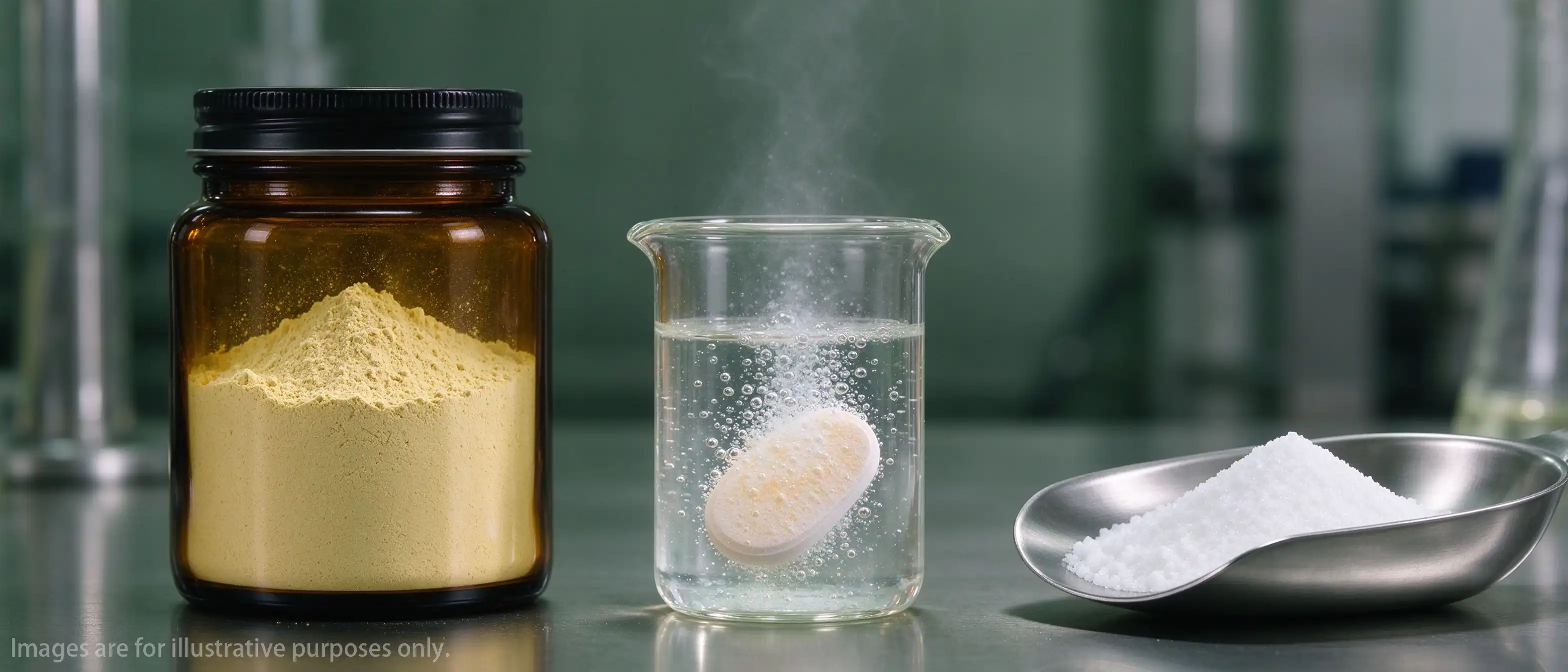
1. The Biological Blueprint: Systemic vs. Topical
To build a successful Chloasma protocol, you must divide your formulation strategy into systemic suppression (oral) and localized degradation (topical).
Systemic Endocrine & Oxidative Suppression (Internal)
Target: Hepatic Function & ROS ClearanceChloasma flare-ups are heavily driven by internal Reactive Oxygen Species (ROS) and hepatic (liver) metabolic strain linked to hormone fluctuations. By introducing massive, bioavailable doses of Glutathione and Green Tea Extract systemically, we dramatically lower the total body oxidative burden. The liver uses Glutathione to process and excrete excess estrogenic compounds, effectively lowering the systemic alarm that tells facial melanocytes to panic and produce pigment.
The Vascular Intervention (Topical)
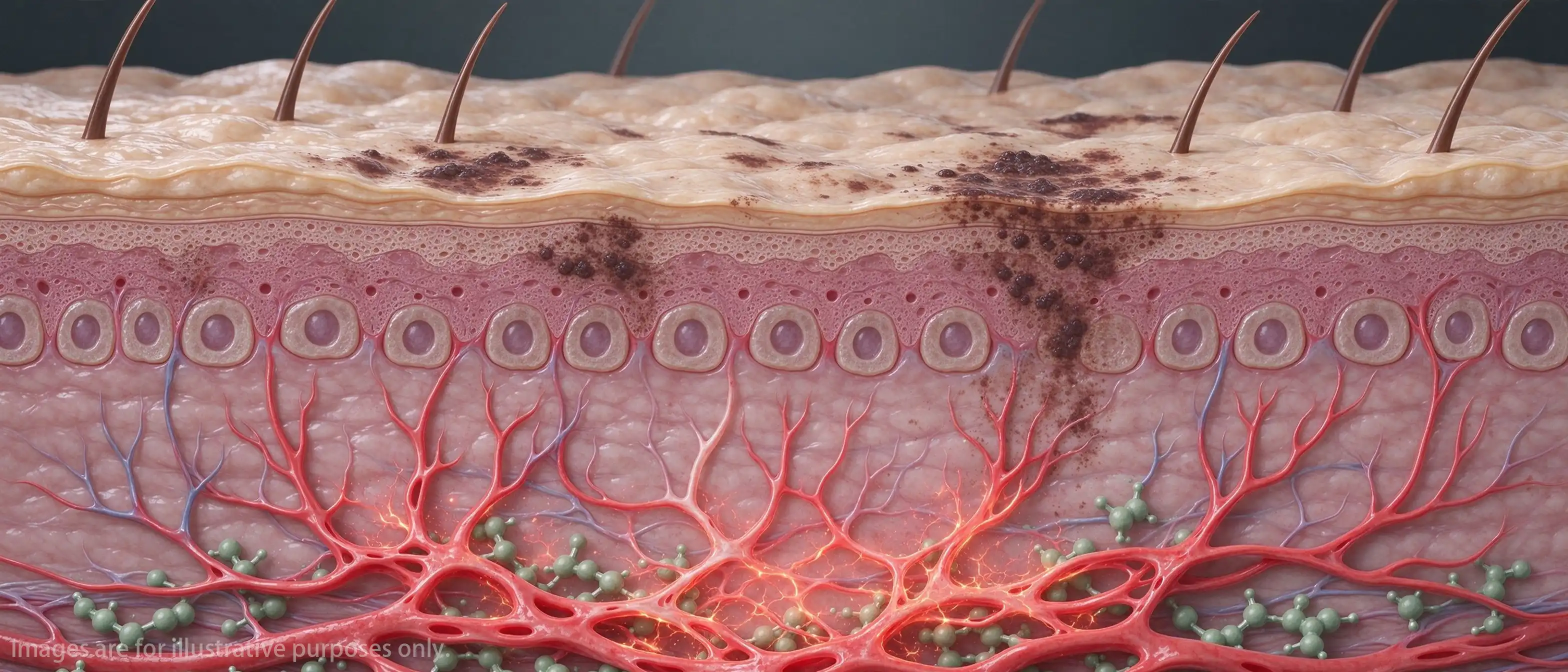
Target: Plasminogen Activator & CapillariesClinical histology of melasma often shows increased vascularity (extra blood vessels) directly beneath the pigmentation. UV light increases plasminogen activator activity, which stimulates melanogenesis and capillary growth. This is where Tranexamic Acid is mandatory. It acts as a plasmin inhibitor, simultaneously shutting down the vascular inflammation and blocking the arachidonic acid cascade that triggers melanin. It is the bridge between vascular health and pigment control.
Targeted Melanin Degradation & Blocking (External)
Target: Tyrosinase ChelationOnce the internal triggers and vascular inflammation are suppressed, you can finally attack the localized pigment factory. This relies on heavy-duty topical APIs like Alpha-Arbutin (to competitively occupy the tyrosinase enzyme) and Kojic Acid (to chelate the copper ions that tyrosinase requires to function). Because the systemic triggers are quiet, these topicals can actually clear the skin without the pigment instantly reforming.
2. Core API Matrix: Mechanisms & Usage Rates
We select ingredients based on their exact pharmacokinetic fit for either systemic ingestion or topical dermal delivery. Below is how our core API portfolio is deployed.
* Formulation Disclaimer: The core ingredients and usage rates listed below are provided for reference and constructive guidance only. They do not represent final regulatory requirements or mandatory formulations. Formulators must adjust, test, and validate ratios based on specific product formats, synergistic interactions, and regional market compliance.
| Core API | Suggested Usage & Limits | Mechanism & Delivery Path |
|---|---|---|
| Glutathione (GSH) | 250mg - 500mg (Oral) (Topical: 1.0% - 3.0%) |
Primary Systemic: When taken orally via effervescent or liposomal vehicles, it radically reduces systemic oxidative stress and aids liver metabolism, quieting the endocrine triggers of Chloasma. |
| Tranexamic Acid | 2.0% - 5.0% (Topical) *Oral use is strictly Rx/Medical only. |
Vascular Intervention: Topically inhibits plasminogen binding to keratinocytes, reducing both the underlying capillary redness (erythema) and the subsequent melanin production unique to melasma patches. |
| Stabilized VC (AA2G) | 1.0% - 3.0% (Topical) (Oral VC: 500mg - 1000mg) |
Dual Pathway: Orally, it regenerates oxidized Glutathione back to its active state. Topically, it reduces oxidized DOPAquinone back to DOPA, physically fading existing dark patches. |
| Alpha-Arbutin | 1.0% - 2.0% (Topical) *EU SCCS limit: Max 2% in face creams |
Local Inhibitor: Strictly topical. Acts as a highly stable, competitive inhibitor of the tyrosinase enzyme right at the site of the hyperpigmentation. |
| Kojic Acid | 1.0% - 2.0% (Topical) (Prone to oxidation) |
Copper Chelator: Strips copper ions required for tyrosinase synthesis. Excellent for spot treatments when effectively stabilized against oxygen. |
| Green Tea Extract | 100mg - 300mg (Oral) (Topical: 0.5% - 2.0%) |
Inflammatory Suppressor: EGCG is a massive anti-inflammatory. It suppresses NF-kB pathways and directly protects cells from UV-induced DNA damage that triggers the melanogenesis alarm. |
3. Application: OEM/ODM Custom Manufacturing Solutions
To treat Chloasma, brands must offer a protocol, not just a product. Here is how we execute integrated OEM/ODM internal-external solutions for our B2B clients:
Glutathione & VC Effervescent Tablet
The Internal Base: By using an effervescent format, we ensure rapid gastric emptying and extremely high bioavailability of the active antioxidants. This daily drink lowers systemic ROS and regenerates active GSH continuously, cutting off the endocrine pigment signal.
Glutathione & Tranexamic Acid Lotion
The Vascular Calmer: A lightweight daily topical. Tranexamic acid targets the plasminogen cascade to shrink the vascular bed feeding the melasma, while micro-encapsulated topical Glutathione neutralizes surface-level UV damage without oxidizing in the bottle.
Green Tea Extract & VC Solid Beverage
The Anti-Inflammatory Stick-Pack: A secondary internal protocol utilizing highly purified EGCG from Green Tea. It suppresses systemic inflammatory cytokines (NF-kB) that exacerbate stubborn pigmentation during hormonal shifts.
Arbutin Ointment & VC Essence Water
The Spot Eraser: For the most stubborn dermal patches. A heavy occlusive ointment base drives high-concentration Alpha-Arbutin and Kojic Acid deep into the basal layer, forcefully locking out the tyrosinase enzyme while the internal supplements do the background work.
Formulation Bench FAQ
In almost all major commercial markets (FDA, EMA), oral Tranexamic Acid is strictly classified as a prescription medication (an anti-fibrinolytic used to stop bleeding). It carries risks of deep vein thrombosis. For OEM/ODM consumer health brands, Tranexamic Acid must be strictly limited to topical cosmetic applications, while Glutathione and Green Tea cover the oral/internal quadrant.
Kojic acid is highly prone to oxidation and chelation with trace iron in the water phase, which turns formulations yellow or brown. In our Arbutin & Kojic Acid Ointment matrix, we mitigate this by formulating in a strict low-oxygen environment, adding secondary chelators like Disodium EDTA (0.1%), and encapsulating the Kojic Acid in a lipophilic base to shield it from aqueous degradation. Finally, it must be packaged in an opaque, airless container.
Glutathione has poor oral bioavailability because gastric enzymes break it down. When formulated as an effervescent tablet, the carbon dioxide bubbles alter the gastric pH and significantly speed up gastric emptying. The liquid solution bypasses the harsh stomach environment much faster than a solid capsule, allowing more intact GSH to reach the intestinal transporters.
Tranexamic Acid is highly water-soluble but it is an amino acid derivative. It tends to shift the formulation pH upward. If your lotion relies on pH-sensitive polymers (like Carbomers) to maintain viscosity, the Tranexamic Acid will crash the emulsion. You must buffer the water phase heavily (around pH 5.5 to 6.5) and use non-ionic or highly resilient thickeners like Xanthan Gum.
Academic & Clinical References
- Tse, T. W. (2013). Tranexamic acid: an important adjuvant in the treatment of melasma. Journal of Cosmetic Dermatology. [PubMed: 23438133]
- Handog, E. B., et al. (2009). An open-label, single-arm trial of the safety and efficacy of a novel preparation of glutathione as a skin-lightening agent in Filipino women. International Journal of Dermatology. [PubMed: 26467049]
- Katiyar, S. K., et al. (2001). Green tea and skin. Archives of Dermatology. [PubMed: 10926734]
Engineer Your Internal-External Protocol.
Don't try to bleach an endocrine problem with a single topical cream. If you are launching a clinical-grade hyperpigmentation line, contact our technical operations team for custom OEM/ODM internal and external compounding matrices.
Request Formulation Support & OEM PricingDisclaimer: These bench notes are for B2B industry education and authorized OEM/ODM compounding reference only. Not for direct consumer use. Formulation limits, stability testing, and claims must be validated by qualified personnel according to regional cosmetic and dietary supplement laws.
Send Inquiry