

Standardizing Antithrombin Units: Sourcing High-Yield Leech Extract (>300 ATU/g)
Sep 29, 2026
Leave a message
The animal-derived extraction matrix described herein (Leech Extract / Hirudin API) is supplied strictly as an unformulated Active Pharmaceutical Ingredient (API) intermediate and functional dietary supplement raw material. It is explicitly designated for industrial use, analytical reference standard development, and authorized in vitro / pre-clinical scientific research only. It is not a finished therapeutic product and is not intended to diagnose, treat, or cure any cardiovascular or hematological conditions. Sourcing of raw biomass is stringently limited to regulated, agricultural breeding facilities (specifically Poecilobdella manillensis) accompanied by official Veterinary Health Certificates. Purchasing entities assume absolute legal liability for securing appropriate animal by-product import permits and adhering to local pharmacopeial regulations.
Standardizing Antithrombin Units: Sourcing High-Yield Leech Extract (>300 ATU/g)
An R&D Bench Report on Direct Thrombin Inhibition, Hirudin Isolation, and Bivalent Binding Kinetics.
However, procuring functional leech extract presents severe analytical challenges. The market is saturated with "crude pulverized leech powder." This commodity-grade material is merely sun-dried whole tissue. It contains massive, inactive proteins, heavy bacterial loads, and virtually untraceable levels of active Hirudin. When formulation engineers attempt to use this crude powder, the biological efficacy is zero, and the final product is compromised by intense biological odors and poor aqueous solubility.
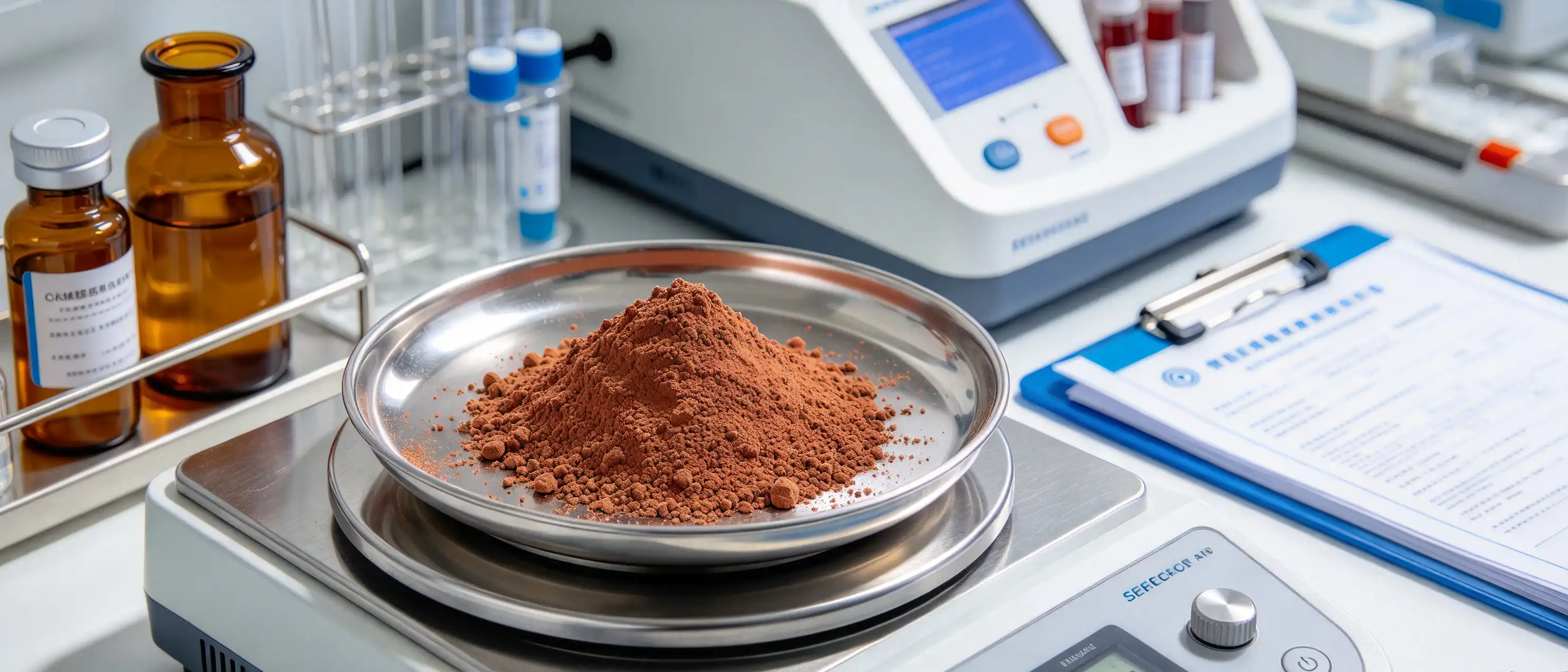
Clinical-grade efficacy demands quantitative standardization. Xi'an Tihealth engineers a highly refined, 100-mesh reddish-brown extract sourced exclusively from Poecilobdella manillensis (the Asian medicinal leech, noted for its superior peptide yield). We abandon ambiguous weight-ratio claims (e.g., 10:1 extract) in favor of strict enzymatic titration. Every batch is guaranteed to exceed 300 ATU/g (Antithrombin Units per gram). This dossier breaks down the bivalent binding physics of Hirudin, the chromogenic assay methods used for QA, and the cold-extraction parameters required to protect this fragile peptide.
1. Biochemical Kinetics: Hirudin and Direct Thrombin Inhibition
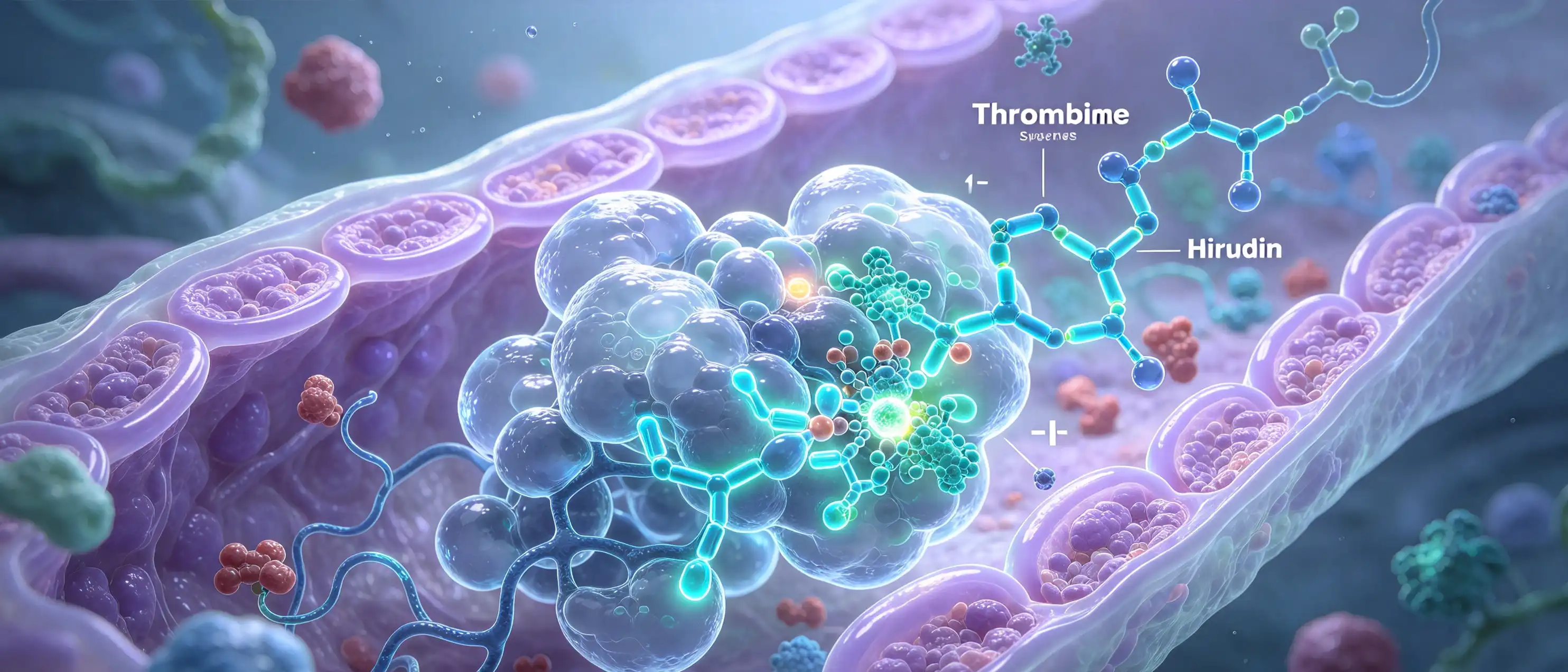
Hirudin is a relatively small peptide consisting of 65 amino acids. Unlike synthetic blood thinners or plant-derived flavonoids, Hirudin targets a single, highly specific enzyme in the human coagulation cascade: Thrombin (Factor IIa). The binding affinity between Hirudin and Thrombin is one of the strongest non-covalent interactions known in biochemistry.
Bivalent Binding Architecture
The inhibitory power of Hirudin stems from its bivalent (two-point) binding structure. The globular N-terminal domain of the Hirudin peptide binds directly into the deep, hydrophobic catalytic active site of Thrombin. Simultaneously, the highly acidic C-terminal tail of Hirudin binds to Thrombin's anion-binding exosite-I (the exact site where Thrombin typically recognizes fibrinogen). By physically occupying both critical sites at once, Hirudin instantly paralyzes the enzyme, completely preventing the conversion of soluble fibrinogen into insoluble fibrin clots.
Independence from Antithrombin III
Legacy anticoagulants, such as Unfractionated Heparin (UFH), are indirect inhibitors. They require a circulating plasma protein called Antithrombin III (ATIII) to function. If a patient is deficient in ATIII, heparin fails. Hirudin operates as a Direct Thrombin Inhibitor (DTI). It bypasses ATIII entirely, neutralizing thrombin directly in the bloodstream. This direct action yields a highly predictable, dose-dependent pharmacokinetic response without triggering Heparin-Induced Thrombocytopenia (HIT).
Inhibition of Clot-Bound Thrombin
A massive physiological limitation of heparin is its inability to neutralize thrombin that is already embedded within an existing fibrin clot. This active clot-bound thrombin continues to drive localized coagulation. Hirudin is structurally compact enough to penetrate existing thrombus structures. It reaches and successfully paralyzes clot-bound thrombin, making it highly valuable in advanced formulations targeting microvascular stagnation and severe contusion recovery.
2. Analytical Matrix: Crude Powder vs. Standardized Extract
Purchasing unverified animal tissue guarantees formulation failure. High-shear equipment clogs, and final products fail basic efficacy tests. Compare the biochemical parameters below.
| Analytical Property | Crude Pulverized Leech (Commodity Grade) | Xi'an Tihealth Leech Extract (>300 ATU/g) |
|---|---|---|
| Active Quantification | Vague 10:1 ratio. No measurable enzymatic activity. | Standardized via Chromogenic Assay. Strictly >300 ATU/g. |
| Physical State & Granulometry | Coarse fragments (40 mesh). High heavy metal risk. | Fine reddish-brown powder. Precise 100 mesh fineness. |
| Moisture & Stability | High moisture retention. Prone to bacterial spoilage. | Lyophilized. Moisture content strictly controlled ≤ 5.0%. |
| Taxonomic Source | Mixed, unidentified aquatic species. Low native hirudin. | 100% Poecilobdella manillensis (High-yield medicinal strain). |
3. Process Engineering: Cold Extraction and ATU Standardization
Hirudin is a fragile polypeptide. Subjecting raw leech biomass to standard high-heat reflux extraction immediately denatures the tertiary structure of the peptide, permanently destroying its ability to bind to thrombin. Xi'an Tihealth isolates this API utilizing strict thermal management and biological purification protocols.
Cold Saline Extraction
We process freshly harvested, sterilized Poecilobdella manillensis biomass in low-temperature jacketed reactors (maintained strictly below 15°C). We utilize specific buffered physiological saline solutions rather than harsh organic solvents. This gentle aqueous extraction pulls the highly water-soluble hirudin peptides out of the glandular tissue without inducing thermal denaturation.
Vacuum Lyophilization
Removing the aqueous solvent requires high-vacuum freeze-drying (lyophilization). By freezing the extract and allowing the ice to sublimate under low pressure, we eliminate the need for evaporative heat. The resulting reddish-brown powder maintains a moisture content strictly ≤ 5.0%. This profound dehydration prevents hydrolytic degradation during the API's 24-month shelf life.
Chromogenic Substrate Assays
High-Performance Liquid Chromatography (HPLC) cannot measure biological activity. We quantify the API using functional enzymatic titration. The extract is exposed to standardized human thrombin and a specific chromogenic substrate. By measuring the inhibition of color development, we calculate the exact Antithrombin Units per gram. We guarantee a baseline output of >300 ATU/g.
4. B2B Formulation and Deployment Environments
Our 100-mesh standardized powder allows for frictionless integration into demanding, high-margin dosage formats across the supplement and cosmetic sectors:
Cardiovascular & Microcirculation Complexes
The primary commercial application. Formulators dry-blend this fine powder alongside Nattokinase and Lumbrokinase in oral cardiovascular support capsules. The high ATU assay ensures the formulation targets blood stasis and optimizes peripheral microcirculation.
Transdermal Bruise & Trauma Creams
Due to its peptide structure, the extract incorporates effectively into topical hydrogels and ointments. It is deployed in sports medicine formulations to accelerate the dispersion of subcutaneous hematomas (severe bruising) and localized inflammatory stasis following blunt force trauma.
Scientific Analytical Research
Academic and institutional laboratories procure the powder to conduct mechanistic studies on alternative anticoagulation pathways. The extract serves as a benchmark biological standard for evaluating novel direct thrombin inhibitors in vitro.
Formulation & Sourcing FAQ
ATU stands for Antithrombin Units. It is an international functional unit used to quantify the biological potency of direct thrombin inhibitors. One ATU is defined as the amount of Hirudin required to completely neutralize one unit of World Health Organization (WHO) standard human thrombin at 37°C. A specification of >300 ATU/g guarantees a potent, pharmacologically active raw material, whereas unstandardized 10:1 powders often yield zero functional ATU.
Crude animal powders smell foul due to rapid lipid oxidation and bacterial breakdown. Xi'an Tihealth processes the raw Poecilobdella manillensis biomass immediately post-harvest. The cold-saline extraction isolates the peptide fraction while leaving the degradable lipid matrix behind. The subsequent freeze-drying step strips the moisture content below 5%, halting microbial action. While it retains a faint, neutral "fishy" aroma inherent to marine/aquatic extracts, the severe rancidity is entirely eliminated.
Granulometry dictates manufacturing efficiency. Cheap extracts sit around 40-60 mesh; these large, irregular particles separate during dry blending, causing content uniformity failures in your final dosage. A 100-mesh powder is exceptionally fine. It ensures homogenous distribution within complex dry blends (such as mixing with Nattokinase or plant extracts) and flows flawlessly through high-speed rotary capsule filling equipment without bridging in the hopper.
Aquatic organisms bioaccumulate heavy metals if harvested from polluted water sources. To neutralize this risk, Xi'an Tihealth sources raw material exclusively from GAP-certified, closed-system breeding reservoirs. Post-extraction, every commercial batch is subjected to rigorous Inductively Coupled Plasma Mass Spectrometry (ICP-MS) to verify that Pb, As, Cd, and Hg levels fall strictly below the regulatory thresholds established by global pharmacopeias.
Lyophilized peptide powders are inherently hygroscopic. We manage packaging in strict volumes (ranging from 50g up to 1kg bulk bags) utilizing heavy-gauge, multi-layer aluminum foil pouches. These bags are hermetically sealed under controlled environments. This prevents ambient moisture ingress during maritime or air freight, guaranteeing the powder remains free-flowing and biochemically stable upon arrival at your compounding facility.
Secure your cardiovascular pipelines with strictly standardized animal APIs.
Request ATU Assay Data & Bulk PricingSend Inquiry