

Halophilic Survival: Sourcing High-Purity Ectoin for API Formulations
Apr 15, 2026
Leave a message
The thermodynamic parameters, hydration shell mechanisms, and Active Pharmaceutical Ingredients (APIs) discussed in this bench report are provided strictly for B2B dermocosmetic compounding and authorized OEM/ODM manufacturing. Ectoin is a physiological protectant, not a primary UV filter. All downstream formulation claims regarding TEWL or anti-inflammatory efficacy must strictly comply with the cosmetic regulations of the target regional market prior to commercial distribution.
Halophilic Survival: Sourcing High-Purity Ectoin for API Formulations
The thermodynamic reality of extremolytes: A forensic breakdown of preferential exclusion, hydration shells, and why ionic fermentation ash is crashing your emulsions.
Stop categorizing Ectoin as a standard humectant. If your R&D laboratory is treating Ectoin (1,4,5,6-tetrahydro-2-methyl-4-pyrimidinecarboxylic acid) like a mere bio-alternative to Hyaluronic Acid or Glycerin, you are fundamentally underutilizing its molecular potential.
Ectoin is an Extremolyte-a zwitterionic cyclic amino acid derivative synthesized by halophilic microorganisms to survive the lethal osmotic pressure of hypersaline environments. Its primary function is not to "bind" water through hydrogen bonding like polyols. It is to structurally reorganize the solvent environment itself.
At Xi'an Tihealth, we deconstruct Ectoin not through skin-feel marketing, but through the lens of macromolecular stability. Below is the precise technical directive our operations team uses to evaluate true API-grade Ectoin (CAS 96702-03-3) and execute high-performance B2B OEM compounding.
1. The Biophysical Blueprint: Why Ectoin is Structurally Superior
The Mechanism of "Preferential Exclusion"
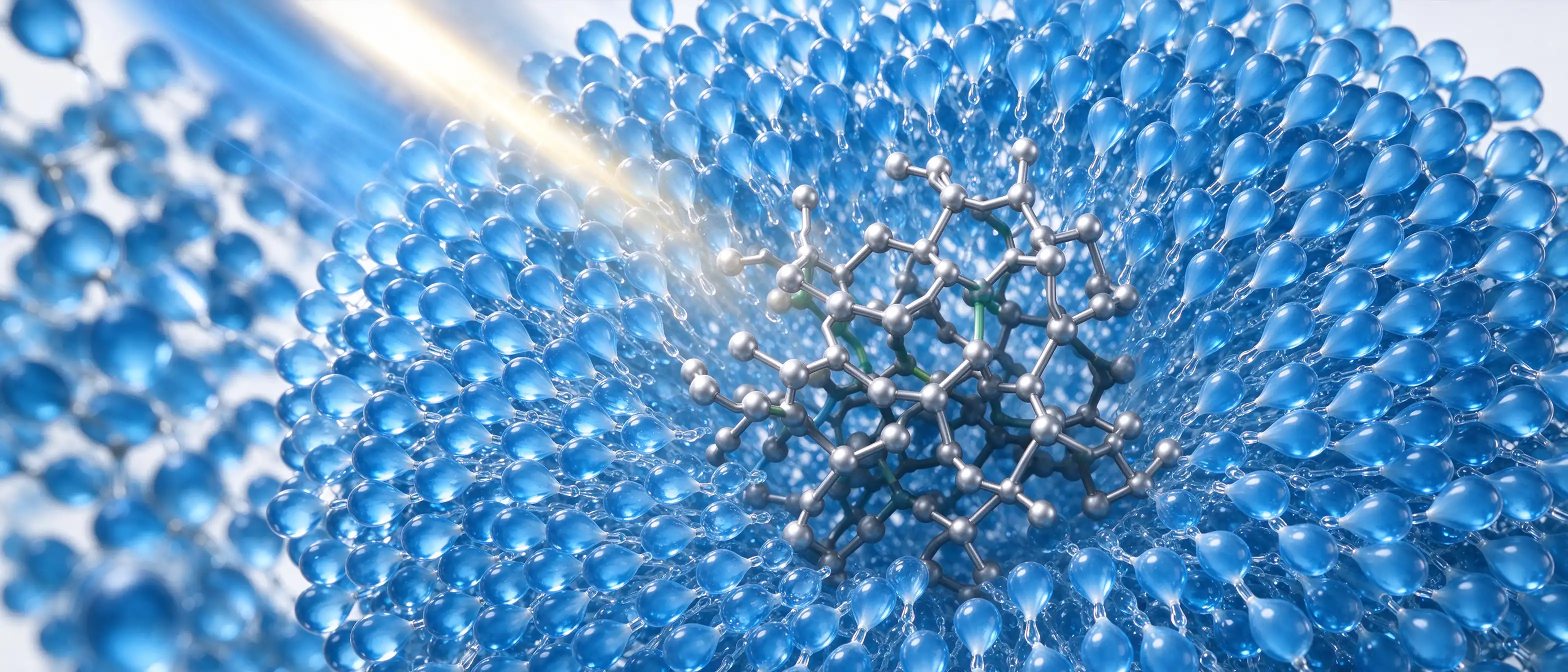
Target: Protein StabilizationTo understand Ectoin, you must understand thermodynamics. Unlike urea, which integrates into the hydration layer, Ectoin molecules are "preferentially excluded" from the surface of biological macromolecules. By staying slightly away from the protein interface, Ectoin forces surrounding water dipoles to pack tightly, creating a dense "water shield." This makes it energetically unfavorable for the cell membrane to denature under UV or thermal stress.
The Fermentation Trap: Ionic Ash & Emulsion Crashing
Target: Formulation RheologyEctoin is derived from the fermentation of Halomonas elongata. If purification is incomplete, the powder will contain residual ash (inorganic salts). On the factory floor, these residual ions aggressively screen the electrical double layer of your primary emulsifiers ("double layer compression"). If your premium anti-aging cream begins to thin out or exhibits syneresis after 12 weeks of stability testing, look at your Ectoin source.
Bench Notes: Thermal Resilience & Multi-Target Stacking
Target: Phase IntegrationEctoin is exceptionally heat-stable and highly water-soluble (up to 4M). You can integrate Ectoin into the aqueous phase and subject it to standard 80°C emulsification cycles without potency loss. We recommend stacking Ectoin with low-molecular-weight Hyaluronic Acid. Ectoin protects the cellular "machinery" (membranes), while HA manages the "interstitial fluid," creating a flawless dual-depth matrix.
2. Ectoin Technical Data Sheet (R&D Spec Check)
To ensure your emulsion survives global shipping and a 24-month shelf life, mandate these pharmaceutical-grade specifications on your procurement sheets.
| Technical Parameters | Xi'an Tihealth Spec (API Grade) | Test Method & R&D Advantage |
|---|---|---|
| Appearance | White Crystalline Powder | Visual (Indicates zero charred organic matter). |
| Assay (Purity) | ≥ 99.0% | HPLC (Ensures maximum extremolyte payload). |
| Residue on Ignition (Ash) | ≤ 0.5% | Gravimetric (Critical to prevent emulsion crashing). |
| pH (2% aqueous) | 6.0 – 8.0 | Potentiometric (Ensures no acidic synthesis residuals). |
| Heavy Metals (Pb, As) | ≤ 1.0 ppm | ICP-MS (Bypasses fermentation contamination). |
3. Application: OEM/ODM Custom Formulation Solutions
A true extremolyte requires precise formulation deployment. By combining our strict low-ash Ectoin API with our advanced Anti-Photoaging Formulas, B2B clients can create uncompromising cellular defense portfolios. Here is how we execute Ectoin OEM/ODM solutions:
"Atmospheric Defense" Facial Mists
The Clear Solution: Because our API is virtually free of residual organic impurities, it dissolves to create a 100% transparent liquid matrix. This is perfect for high-concentration (2-5%) anti-pollution mist sprays without any nozzle-clogging turbidity.
Biological SPF-Boosting Sunscreens
The Cellular Shield: Ectoin is an exceptional SPF biological booster. By forming thermodynamic hydration shells around epidermal Langerhans cells, it dramatically prevents UVA-induced apoptosis and reduces inflammatory sunburn erythema beneath the physical UV filter layer.
Post-Clinical Hydration Gels
The Rheology Preserver: Formulating thick post-laser soothing gels requires sensitive polymers (like Carbopol). Our strict ≤ 0.5% Ash limit ensures that the zwitterionic Ectoin will not interfere with the polymer matrix, maintaining a luxurious, high-viscosity gel structure.
Frequently Asked Questions (Formulator FAQ)
No. While both are compatible solutes, their thermodynamic impact is distinct. Betaine primarily acts as a simple osmotic balancer. Ectoin goes further by forming a vastly more organized and stable hydration shell. In comparative trials, Ectoin demonstrates significantly superior long-term membrane protection and anti-inflammatory efficacy under environmental pollutant stress compared to standard betaine.
High-purity Ectoin is 100% water-soluble and creates a perfectly clear solution. If you observe any turbidity or "haze" after addition, it is an immediate red flag indicating high residual ash or organic impurities in your raw material.
Ectoin is not a primary UV filter and does not block UV rays directly. Therefore, it cannot be legally used to claim SPF numbers. However, it acts as a biological shield, preventing the thermal denaturing of dermal proteins and making your overall physical/chemical SPF protection biologically complete.
Required Scientific Corroboration
Anchor your regulatory dossiers in peer-reviewed thermodynamic literature:
- Electrochimica Acta: Influence of the extremolyte ectoin on the hydrogen-bond network of water. Analysis of water dipole restructuring. [View Data]
- Molecular Microbiology: Ectoine as a compatible solute in Halomonas elongata. The definitive paper on the halophilic survival mechanism. [PubMed: 2115286]
- Skin Pharmacology and Physiology: Ectoine: An Effective Natural Substance to Prevent UVA-Induced Photoaging. Clinical proof of Ectoin's ability to prevent DNA damage. [PubMed: 15190154]
The Manufacturing Verdict: Demand Purity, Not Just Claims.
Stop risking your high-end formulas on crude fermentation broths masquerading as high-purity Ectoin. Audit your ash content. Focus on hydration shell engineering.
Request Low-Salt Ectoin SpecificationsSend Inquiry