


The Valerian Dilemma: Is Thermal Degradation Sabotaging Your Sleep API?
Jul 21, 2026
Leave a message
The Valerian Dilemma: Is Thermal Degradation Sabotaging Your Clinical Sleep Therapeutics?
An Internal Audit on Isovaleric Off-Gassing, Valepotriate Destruction, and EP11.0 Compliance in Valerenic Acid Sourcing
1. Why Are Commodity Valerian Extracts Failing Efficacy Trials?
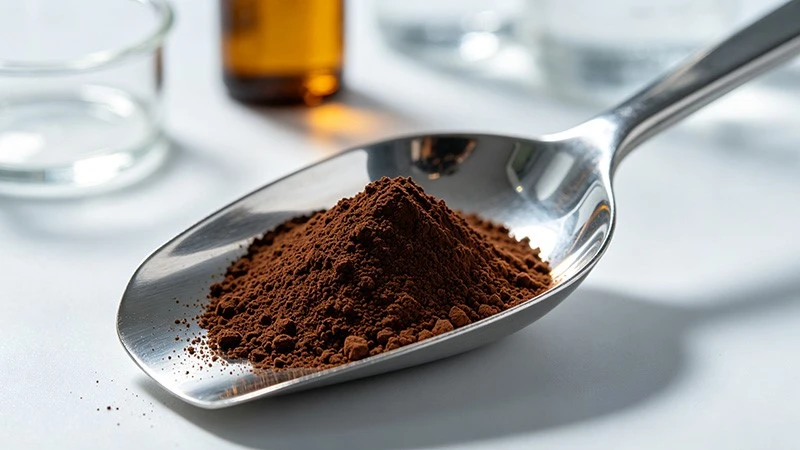
In our internal audits of global botanical formulations, we frequently observe a fatal processing error: manufacturers treat Valerian Root like a generic herbal decoction. When crude roots are subjected to standard high-heat water extraction (exceeding 60°C), the delicate valepotriates and valerenic acids suffer immediate thermal cleavage. The result is a dark, heavy powder that smells strongly of Valerian but possesses zero GABA-A modulating capability.
Furthermore, this crude boiling process fails to isolate isovaleric acid, the volatile compound responsible for the infamous "rotten sock" odor. Integrating this unrefined powder into premium dietary complexes not only neutralizes clinical efficacy but triggers massive retail returns due to sensory rejection.
2. Forensic Specification Matrix: Valerian Root API
| Analytical Parameter | Commodity High-Heat Extracts | Tihealth EP11.0 API Grade |
|---|---|---|
| Active Assay (Valerenic Acid) | < 0.1% (Thermally Degraded) | ≥ 0.8% (Intact Sesquiterpenes) |
| Extraction Physics | Boiling Water Decoction (>80°C) | Sub-40°C Countercurrent Flow |
| Organoleptic Profile | Pungent Isovaleric off-gassing | Controlled / Maskable Matrix |
| Residual Solvents (GC-HS) | Unregulated | Strict USP <467> Compliance |
3. The Xi'an Tihealth Engineering Solution
To engineer a truly therapeutic, pharmacopeial-grade API, we deploy a highly specialized manufacturing architecture designed specifically to protect the valerenic acid matrix:
Sub-40°C Countercurrent Extraction
Instead of brute-force heat, we utilize a continuous flow of solvent at temperatures strictly maintained below 40°C. This gently pulls the active sesquiterpenes from the cellular matrix of the rhizome without breaking their molecular bonds. This is mathematically why our batches consistently hit the ≥0.8% benchmark.
Macroporous Resin Chromatography
We run the raw extract through advanced macroporous resin columns to strip away inert botanical waxes and selectively separate the pungent isovaleric acid fractions. The result is a highly concentrated, bioavailable active matrix perfectly suited for small-dosage capsule filling and rapid neurological absorption.
4. Factual Neuromodulation: Beyond "Relaxation"
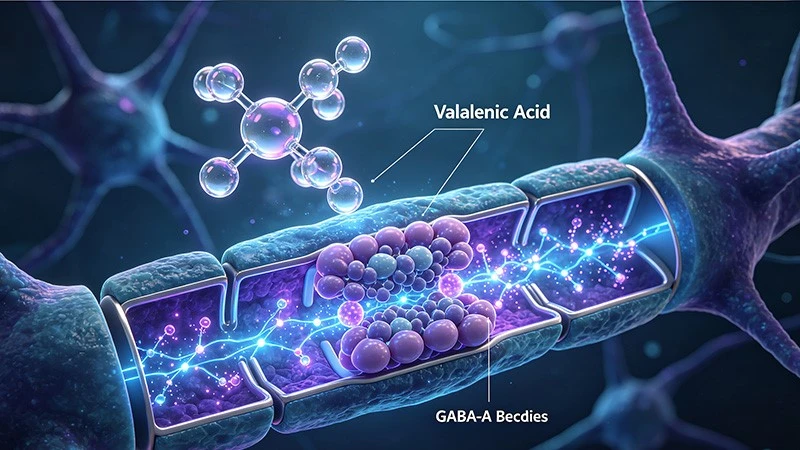
To market a premium sleep aid effectively, brands must transition from vague claims of "calming herbs" to specific neurochemical pathways. Standardized Valerenic Acid operates on two clinically validated fronts:
GABA-A Allosteric Modulation (Sedative)
Valerenic Acid acts as a positive allosteric modulator of GABA-A receptors. By inhibiting the enzymatic breakdown of gamma-aminobutyric acid (GABA) in the synaptic cleft, it forcefully enhances neuro-inhibitory signaling, thereby reducing sleep onset latency.
5-HT5A Receptor Agonism (Anxiolytic)
Beyond sleep, the intact sesquiterpenes exhibit partial agonistic behavior towards Serotonin (5-HT5A) receptors. This biochemical interaction chemically attenuates systemic stress responses without the grogginess of synthetic hypnotics.
Formulator & Procurement FAQ
European export demands absolute analytical transparency. We utilize dual-verification (GC-FID and HPLC) to match the exact botanical monographs outlined in EP11.0. Every dispatched batch is accompanied by a comprehensive Certificate of Analysis (COA) detailing active assays, heavy metal forensics (ICP-MS), and residual solvents to ensure immediate customs and regulatory clearance.
Yes. While our chromatographic purification significantly reduces the pungent isovaleric acid base, formulating liquid wellness shots or relaxing teas requires advanced organoleptic control. Our laboratory provides consulting on appropriate micro-encapsulation techniques and specific excipient matrices to neutralize the remaining sensory footprint.
Written by the Technical Sourcing Team at Xi'an Tihealth Biotechnology Co., Ltd.
*Compliance Disclaimer: Provided exclusively as an unformulated raw material. Purchasing organizations are solely responsible for final formulation testing and regulatory alignment in their respective jurisdictions.*
Send Inquiry