


Mastering the Basal Profile: High-Purity Insulin Degludec API (CAS 844439-96-9)
Aug 14, 2026
Leave a message
Engineering the Flat Basal Profile: High-Fidelity Insulin Degludec API (CAS 844439-96-9)
An R&D Audit on Multi-Hexameric Assembly, Site-Specific Acylation, and Ultra-Long-Acting Peptide Synthesis.
True 24-hour baseline coverage requires a molecule capable of creating a sustained, uninterrupted subcutaneous depot. Insulin Degludec (CAS 844439-96-9) represents the pinnacle of basal insulin engineering. Achieving a half-life exceeding 25 hours and a duration of action beyond 42 hours, it provides an unprecedented flat pharmacokinetic profile. However, manufacturing this complex, acylated peptide requires exceptional stereochemical precision. Crude synthesis inevitably yields structurally compromised analogues that ruin the depot formation. This technical dossier dissects the hexameric assembly mechanics of Degludec, exposes the chemical hurdles of lateral chain acylation, and outlines the forensic manufacturing standards executed at Xi'an Tihealth.

1. Molecular Architecture: The Physics of the Subcutaneous Depot
Insulin Degludec achieves its ultra-long duration not by altering receptor affinity, but by manipulating its physical state within the subcutaneous tissue. The molecule is derived from human insulin with two precise structural alterations: the deletion of threonine at position B30, and the covalent attachment of a 16-carbon fatty diacid (hexadecanedioic acid) to the lysine at position B29 via a glutamic acid spacer.
Multi-Hexameric Assembly
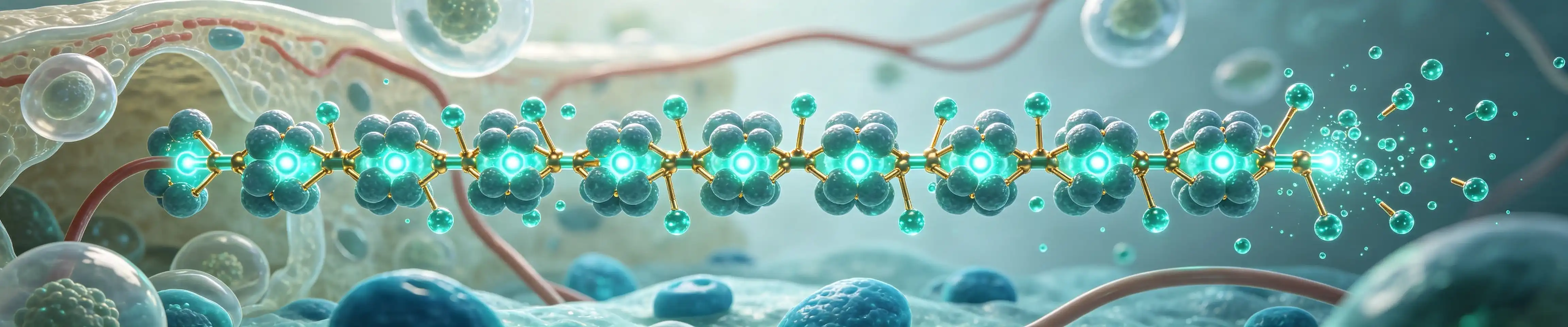
Inside the pharmaceutical vial, Degludec exists as stable, soluble di-hexamers in the presence of specific concentrations of zinc (Zn2+) and phenol. Immediately following subcutaneous injection, the phenol rapidly diffuses into the surrounding interstitial fluid. This sudden change in the chemical microenvironment triggers the unique fatty acid side chains to cross-link adjacent hexamers. The resulting structure is a massive, highly stable, linear multi-hexamer chain that acts as a localized liquid depot.
Rate-Limiting Zinc Depletion
The dissociation of this massive multi-hexamer depot dictates the absorption rate. As zinc ions slowly diffuse away from the ends of the multi-hexamer chains, the structure gradually breaks down into dimers and eventually pharmacologically active monomers. This strictly controlled physical dissociation is the primary mechanism that guarantees a constant, peakless release of insulin molecules into the capillaries over a period exceeding 42 hours.
Albumin Binding in Systemic Circulation
A secondary buffering mechanism occurs once the monomers enter the bloodstream. The hexadecanedioic acid side chain exhibits a strong affinity for circulating serum albumin. Over 99% of Degludec binds to albumin upon entering systemic circulation, creating a secondary circulatory depot. This dual-depot mechanism entirely flattens the pharmacokinetic curve, virtually eliminating the steep peaks that precipitate hypoglycemic episodes.
2. Forensic Formulation Matrix: Degludec vs. First-Generation Basals
The transition from first-generation basal insulins to Degludec requires formulators to rethink the chemical environment of the final injectable product. Understanding these physicochemical differences is critical for procurement and QA teams analyzing API suitability.
| Pharmacokinetic Parameter | Insulin Glargine (1st Gen Basal) | Xi'an Tihealth Degludec API (CAS 844439-96-9) |
|---|---|---|
| Formulation pH | Acidic (pH 4.0). Cannot be mixed with neutral rapid-acting insulins. | Neutral (pH 7.4). Highly miscible; allows for co-formulation (e.g., IDegLira). |
| Depot Mechanism | Isoelectric precipitation in subcutaneous tissue (micro-crystal formation). | Soluble multi-hexamer assembly dictated by phenol/zinc diffusion. |
| Half-Life (t1/2) | ~ 12 hours. Often requires strict same-time daily dosing. | > 25 hours. Supports flexible daily dosing windows without compromising control. |
| Day-to-Day Variability | Moderate variability based on injection site vascularity. | Lowest intra-patient variability coefficient among all basal insulins. |
3. The Xi'an Tihealth Advantage: Precision Peptide Acylation
Synthesizing acylated insulin analogues represents a formidable challenge in pharmaceutical manufacturing. Generic laboratories frequently fail at the acylation stage, producing catastrophic levels of di-acylated impurities, desamido-insulin degradation products, and high-molecular-weight polymers (HMWP). Even minor steric hindrance errors during the attachment of the gamma-glutamyl spacer compromise the hexameric assembly mechanism, rendering the API clinically useless.
At Xi'an Tihealth Biotechnology Co., Ltd., we execute a rigorously audited hybrid synthesis protocol designed to guarantee absolute structural fidelity:
Site-Specific LysB29 Acylation
We utilize proprietary orthogonal protecting groups during synthesis to shield the N-terminal amines. This enforces strictly site-specific conjugation of the hexadecanedioic acid exclusively at the LysB29 residue. This protocol completely eliminates the formation of random poly-acylated impurities that plague substandard API batches.
Multi-Dimensional Prep-HPLC
Post-acylation reaction mixtures contain structurally similar byproducts. Our facility leverages industrial-scale Preparative High-Performance Liquid Chromatography (Prep-HPLC) with optimized gradient elution. This isolates the precise Degludec macromolecule, driving active purity levels past ≥ 99.0% while drastically reducing HMWP levels.
Strict Endotoxin Governance
Given that Degludec is exclusively formulated for parenteral administration, biological contamination is a critical failure point. Our API crystallization and lyophilization processes occur in ISO Class 5 cleanrooms. Bacterial endotoxins are strictly maintained below pharmacopeial limits, ensuring total patient safety during subcutaneous delivery.
4. Industrial Scenarios for Degludec Formulations
Because Insulin Degludec is fully soluble at a physiological pH, it bypasses the formulation bottlenecks associated with older acidic insulins, unlocking highly advanced pharmaceutical applications:
Co-Formulation Injectables (e.g., GLP-1 Combinations)
Unlike Glargine, the neutral pH of Degludec allows for stable single-pen co-formulations with GLP-1 receptor agonists (such as Liraglutide or Semaglutide) or rapid-acting insulins (like Aspart), without creating destructive chemical cross-reactions within the cartridge.
High-Concentration Basal Pens (U-200 Formats)
Due to its high solubility in zinc-phenol matrices, our API facilitates the compounding of concentrated U-200 formulations. This drastically reduces the physical volume of the injection, increasing patient comfort and compliance for individuals requiring massive daily insulin units.
Formulator & Procurement FAQ
The API must be compounded into a highly precise excipient matrix containing zinc acetate, phenol, and meta-cresol at a pH of approximately 7.4. Inside the vial, the zinc forces the peptide into a di-hexamer state, while the phenol acts as a steric blocker, preventing the long fatty acid chains from interacting. Upon injection, the phenol diffuses away, allowing the side chains to cross-link the hexamers into the functional subcutaneous depot.
Unlike solid oral APIs, complex acylated peptides undergo rapid thermal degradation. Following lyophilization, the dry powder is sealed inside aseptic aluminum foil bags under an inert gas flush. Global freight is managed exclusively via strict cold-chain logistics (typically maintained at 2°C to 8°C or deep-freeze, contingent on specific transport duration), utilizing continuous temperature-tracking data loggers to guarantee molecular stability upon arrival.
Yes. Operating under rigorous ISO9001:2015 frameworks, Xi'an Tihealth provides a comprehensive technical package with every dispatch. This includes a robust Certificate of Analysis (COA), high-resolution HPLC chromatograms confirming target purity and impurity isolation, LC-MS validation, and strict bacterial endotoxin reports, streamlining your downstream R&D validation and quality control procedures.
Stabilize your clinical pipelines with ultra-pure, site-specifically acylated peptide APIs.
Request HPLC Chromatogram & Bulk PricingWritten by Wang Xueyan, Technical Operations & Formulation Strategy at Xi'an Tihealth Biotechnology Co., Ltd.
*Compliance Disclaimer: Provided exclusively as an unformulated, research-grade Active Pharmaceutical Ingredient (API). Purchasing organizations are solely responsible for final formulation, clinical testing, compounding safety, and strict regulatory alignment within their respective global jurisdictions.*
Send Inquiry