

Building Multi-Pathway Stress Relief Formulas: GABA, L-Theanine & Phosphatidylserine
Sep 11, 2026
Leave a message
Building Multi-Pathway Stress Relief Formulas: GABA, L-Theanine & Phosphatidylserine
A practical guide to the mechanisms, synergy, dosage forms and sourcing pitfalls behind the three leading stress-management actives.
Formulation Insight: Modern life runs at high speed, and it shows. Chronic stress, fragmented sleep, and persistent emotional tension have moved from personal struggles to mainstream public-health concerns. Consumers no longer settle for a single "calm-and-sleep" pill - they want functional ingredients that are natural, non-drowsy, and multi-pathway.
In my years working with formula developers, three ingredients keep surfacing whenever the brief says "stress relief" or "mood support": γ-aminobutyric acid (GABA), L-theanine, and phosphatidylserine (PS). They often get lumped together, yet each works on a different control point - neural inhibition, brainwave regulation, and stress-hormone management. Understand that distinction and your formula stops being a laundry list of actives and becomes a coherent system.
The Emotional-Wellness Market Is Expanding
Stress-related dietary supplements and functional foods are one of the fastest-growing segments in the nutraceutical industry. Consumer awareness of the mind–body connection keeps rising, buyers are drifting away from drowsy sedatives toward clean-label, non-sedating actives, and new formats - ready-to-drink relaxation beverages, gummies - keep pulling in fresh demand. The real opportunity for brands lies in differentiation: a formula that works through multiple, complementary mechanisms tells a more convincing story and builds a more robust efficacy profile.
The Three Core Actives: Three Distinct Pathways to Calm
GABA (CAS 56-12-2): The Central Nervous System's Brake
GABA is the primary inhibitory neurotransmitter in the mammalian central nervous system. Its core job is to dampen excessive neuronal excitation, balancing excitatory transmitters such as glutamate to ease racing thoughts and mental over-arousal.
A question formulators ask me all the time: does oral GABA actually reach the brain? The honest answer is that its direct penetration is limited - and that is by design. So how does it still work? Through the gut–brain axis. Ingested GABA acts on the enteric nervous system and sends calming signals to the central nervous system via the vagus nerve - whole-body relaxation without ever needing to cross into the brain.
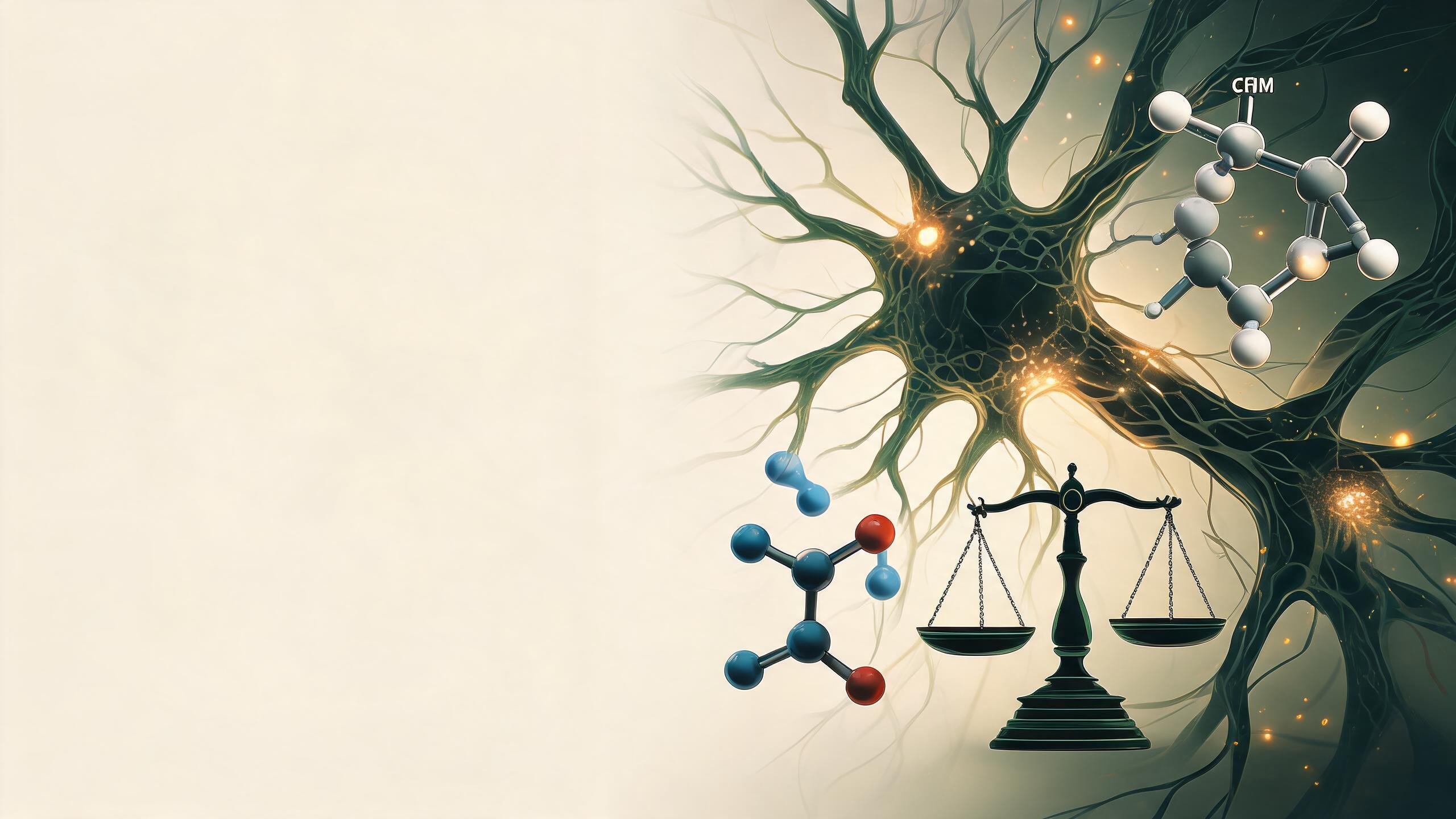
GABA damps over-excitation - the nervous system's natural brake.
For sourcing, choose high-purity fermented GABA produced through lactic-acid-bacteria fermentation - non-synthetic and non-GMO, which suits clean-label products. A fermented GABA with HPLC purity ≥ 99% offers excellent water solubility and works across capsules, gummies, and ready-to-drink functional beverages.
L-Theanine (CAS 3081-61-6): Calm Without the Drowsiness
L-theanine is a unique non-protein amino acid found almost exclusively in green tea - and it is also the source of tea's signature savory-sweet "umami" taste. What sets it apart from classic sedatives is its signature effect: relaxation without sleepiness, a state often described as "calmly alert."
Unlike GABA, L-theanine penetrates the blood–brain barrier effectively. It upregulates alpha brainwave activity and modulates the release of dopamine and serotonin. This is the mechanistic reason a cup of tea can feel grounding rather than foggy - and why L-theanine is often paired with caffeine to blunt the jitter, racing heart, and nervous tension that caffeine alone can trigger.
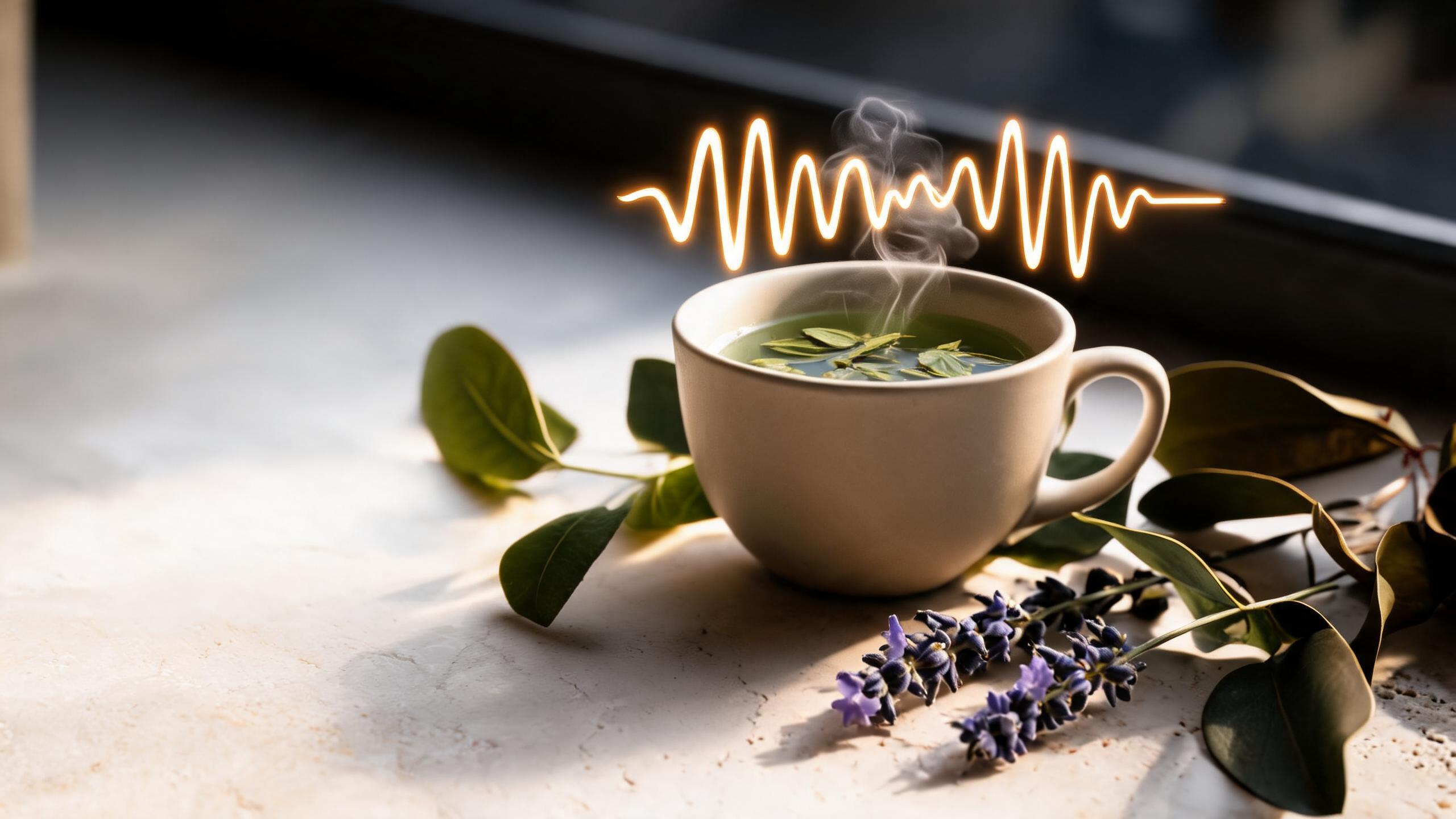
L-theanine raises alpha brainwaves - relaxation without drowsiness.
Sourcing demands careful attention to chiral purity. Only the L-enantiomer is neurologically active; D-theanine competitively inhibits it and can sharply reduce efficacy. Verify the specific-rotation specification to confirm the L-configuration before committing to a lot - I've seen buyers burned here more than anywhere else.
Beyond daily stress relief, L-theanine appears in premenstrual-syndrome (PMS) formulas. A classic 2:1 L-theanine-to-caffeine ratio remains a benchmark for cognitive-focus products.
Phosphatidylserine (CAS 51446-62-9): The Physiological Buffer for Stress Hormones
Here the story shifts from calming the mind to steadying the body's chemistry. Phosphatidylserine is a key structural phospholipid in brain cell membranes, and endogenous PS levels decline naturally with age - affecting membrane fluidity and the efficiency of neuro-receptor signaling.
PS's differentiated mechanism centers on the HPA axis: it buffers the abnormal cortisol surges that accompany stress, lowering the body's physical stress response at the endocrine level, while maintaining neural membrane integrity. This yields dual value - stress management plus cognitive-memory support.
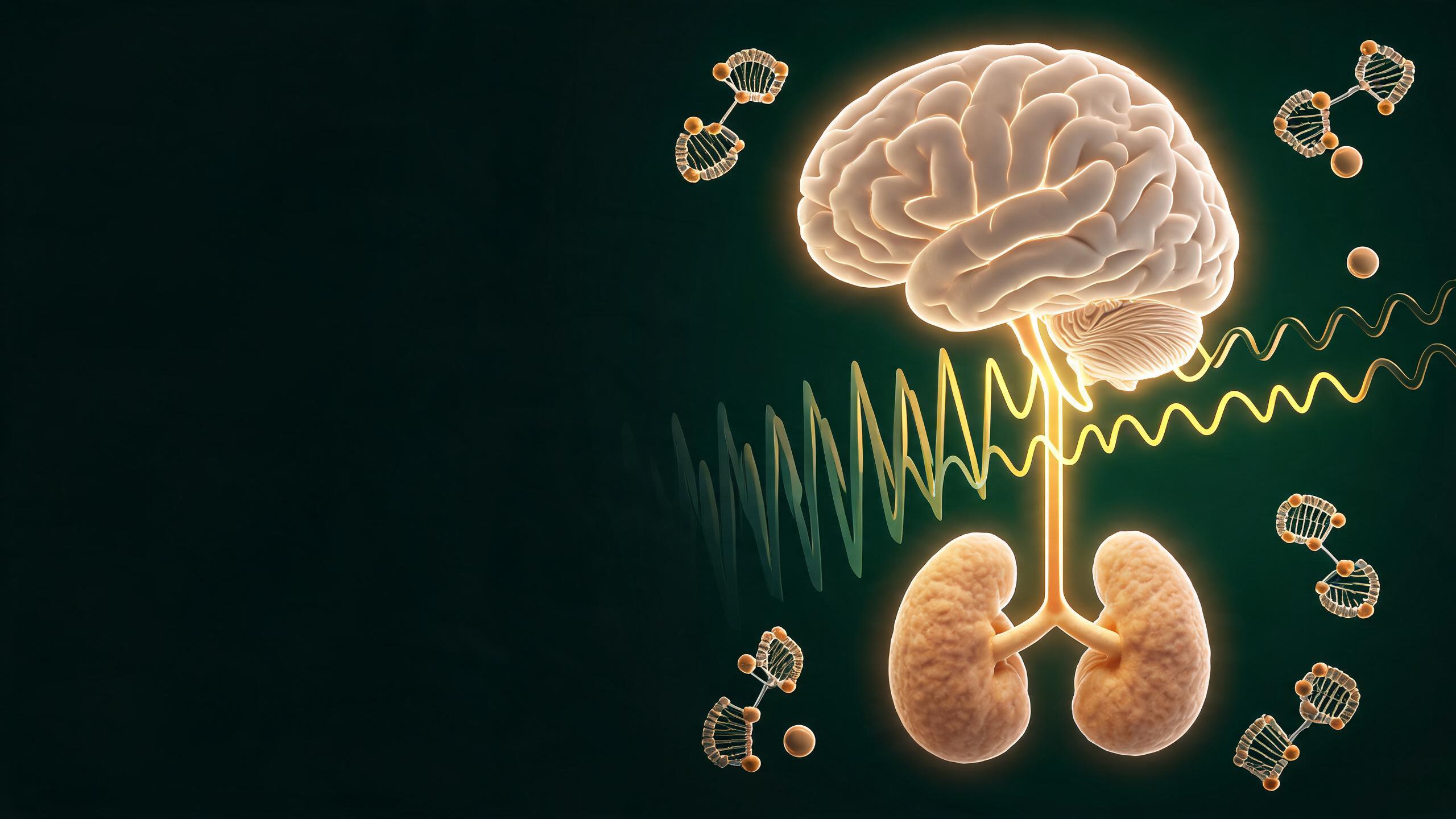
PS smooths cortisol spikes via the HPA axis - stress management plus cognitive support.
Two sourcing options matter for your label and your market: sunflower-derived PS (no soy-allergen risk, preferred for high-end clean-label products) and soy-derived PS (cost-advantaged, but requires allergen declaration in many jurisdictions). PS is inherently lipid-soluble, so liquid-beverage applications require a microencapsulated, water-dispersible PS grade.
One Table to Compare the Three Pathways
| Ingredient | Primary Pathway | Signature Benefit | Best-Fit Format | Key Sourcing Check |
|---|---|---|---|---|
| GABA | Neural inhibition via gut–brain axis | Calms over-excitation, supports sleep onset | Capsules, gummies, RTD drinks | HPLC ≥ 99%, fermented source |
| L-Theanine | Alpha-brainwave upregulation, penetrates BBB | Calm focus, no drowsiness | RTD drinks, capsules, powders | L-enantiomer / optical rotation |
| Phosphatidylserine | HPA-axis cortisol buffering | Stress-hormone balance, cognitive support | Softgels, hard capsules | Soy vs sunflower source, water-dispersible grade |
Synergy Logic: Why Multi-Ingredient Formulas Outperform Single Actives
Because the three ingredients act on different targets, combining them builds a complete stress-response chain - neural calm → brain-state regulation → stress-hormone control.
GABA + L-Theanine
The golden calming duo: GABA damps excitation via the gut–brain axis while L-theanine raises alpha waves centrally, improving sleep onset and stabilizing daytime mood. This fits gummies, RTD relaxation drinks, and sleep capsules.
L-Theanine + Phosphatidylserine
A pressure-and-cognitive dual-guard: L-theanine improves subjective mood while PS suppresses excessive cortisol release - a strong fit for workplace and student populations under sustained high pressure.
GABA + L-Theanine + PS
The full-pathway emotional solution, covering acute agitation, chronic stress, and degraded sleep in one formula - the mainstream development route for premium emotional-health supplements.
Commercialization: Matching Formats to Applications
Dietary Supplements (Capsules & Tablets)
The most mature category. Fermented GABA and L-theanine suit hard capsules directly; PS's lipophilic nature makes softgels the classic carrier. Verify HPLC purity, heavy metals, microbial counts, chiral index, and allergen declarations before purchase, with COA and GMP documentation.
Functional Foods (Gummies & Powders)
GABA and L-theanine are highly water-soluble with mild flavor; PS requires microencapsulation for water-based systems. Position as "relaxation snacks" for the mass market.
RTD Functional Beverages
The current hotspot. "Relaxation drinks" and "calm-focus drinks" differentiate from conventional energy drinks. GABA and L-theanine dissolve well and withstand heat; PS must use a microencapsulated version. Balance flavor and shelf-life stability.
Ingredient Sourcing: A Practical Pitfall Checklist
- GABA - confirm the fermentation source. Prefer lactic-acid-bacteria fermented GABA for clean-label requirements; insist on HPLC ≥ 99% and review loss on drying, heavy metals, and microbial counts.
- L-Theanine - never skip the chiral check. Purity alone is not enough; verify optical rotation to confirm the L-configuration and avoid D-isomer contamination.
- Phosphatidylserine - match source and dosage form. Choose soy vs sunflower by allergen regulations; for liquids, use a water-dispersible microencapsulated grade, as native powder separates in water.
Frequently Asked Questions
GABA works through the gut–brain axis to suppress excessive neural excitation, supporting relaxation and sleep onset. L-theanine penetrates the blood–brain barrier to raise alpha brainwaves, delivering calm focus without drowsiness. In short: GABA is for winding down; L-theanine is for staying calm while alert.
Yes. Their mechanisms are complementary, so combining all three creates a full-pathway emotional solution - provided your dosage form can carry each active (e.g., microencapsulated PS for liquids) and your formula respects local dosage limits.
Only the L-enantiomer of theanine is neurologically active. D-theanine competitively inhibits it and can sharply reduce efficacy, so verifying optical rotation confirms you are buying the active L-configuration.
The molecular function is equivalent. Sunflower-derived PS carries no soy-allergen risk and suits high-end clean-label products; soy-derived PS is more cost-advantaged but requires allergen declaration in many jurisdictions.
For RTD drinks, choose highly water-soluble fermented GABA and L-theanine, plus a microencapsulated, water-dispersible PS grade. Native PS powder will separate and layer in water, so the modified grade is essential.
Conclusion: Build for the Mind–Body Chain
Emotional-wellness and stress relief have moved from a niche to the mainstream. GABA, L-theanine, and phosphatidylserine each bring a distinct, science-backed mechanism - together they create a neural–brain–endocrine framework for stress management. Understand the mechanism, control the raw-material quality, and combine actives thoughtfully by scenario, and you have the foundation for a credible emotional-health product.
If you are building a stress-relief or mood-support formula and want to talk through the sourcing details - COA, chiral specs, microencapsulated grades - I am glad to help walk you through it.
Ready to Source High-Quality GABA, L-Theanine, or Phosphatidylserine?
Our technical team supports formula developers with batch-specific COA documentation, chiral and purity verification, and dosage-form guidance - from sampling through validation to mass production.
Contact UsDisclaimer: This article is for industry education only and does not constitute a product-formulation recommendation. All product development must comply with the regulatory standards of each country and region. Nutritional ingredients are not intended to diagnose, treat, cure, or prevent any disease.
© 2026 All rights reserved · Emotional Wellness Ingredient Guide, Xi'an Tihealth
Send Inquiry